
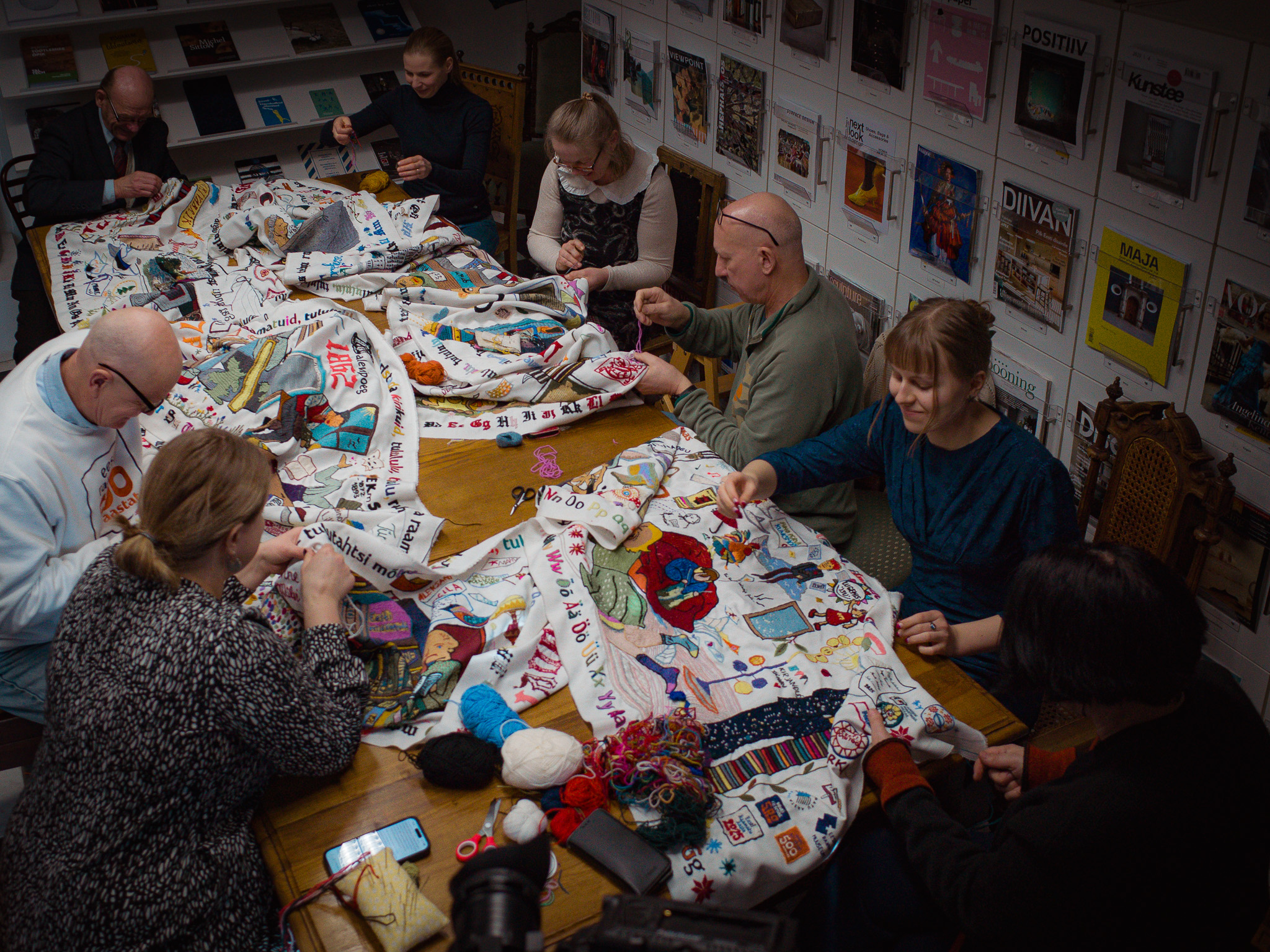
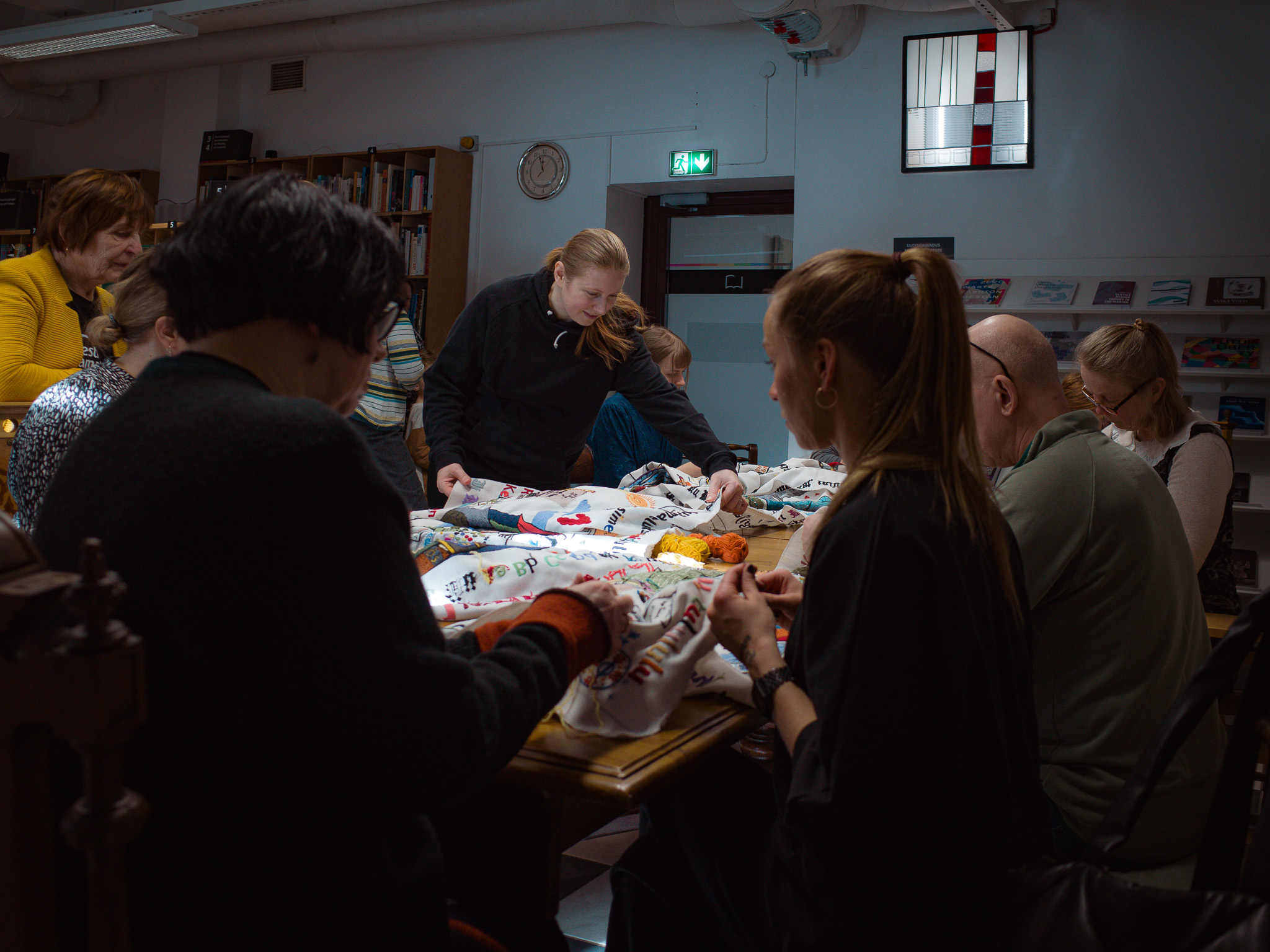
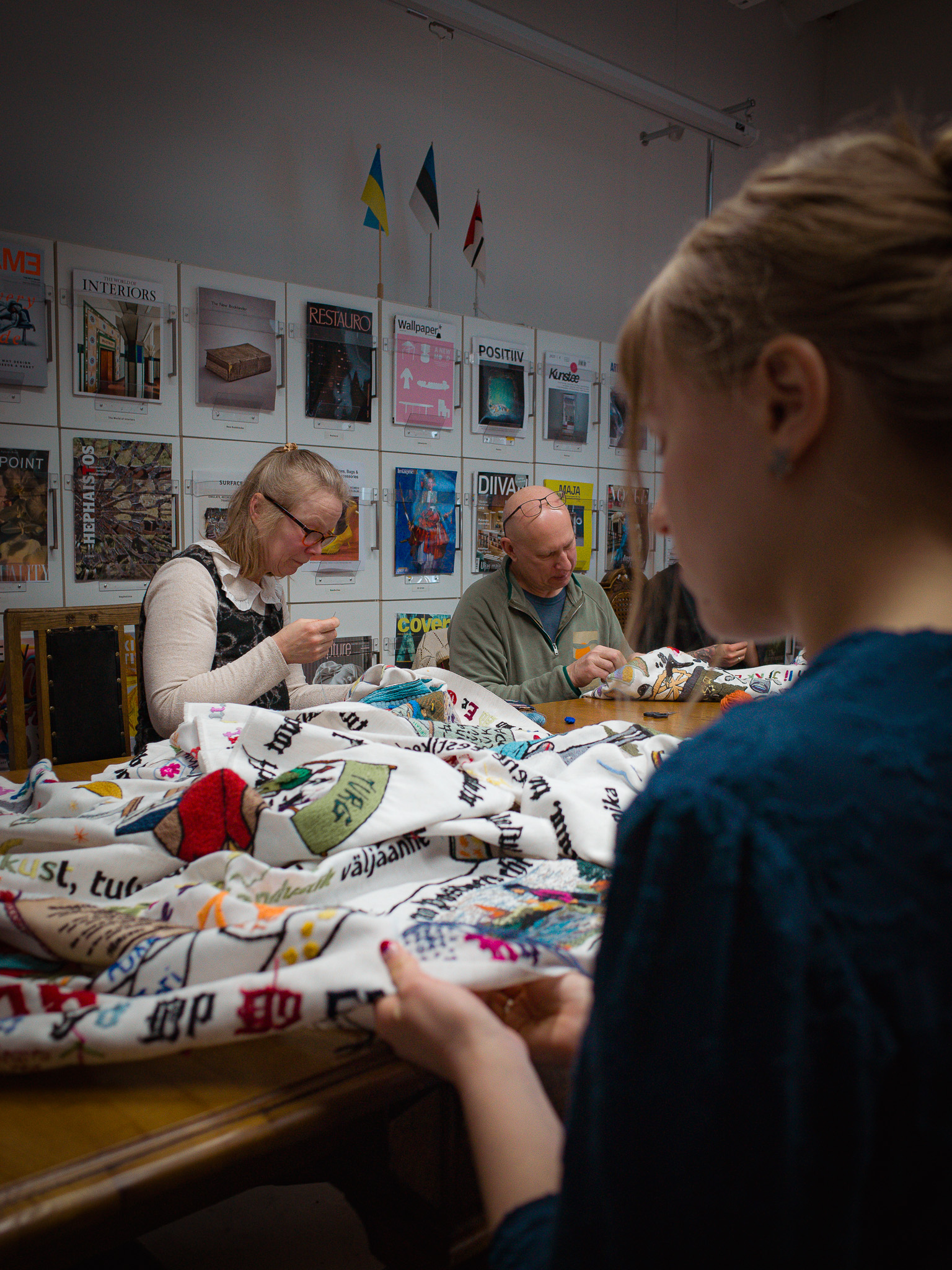
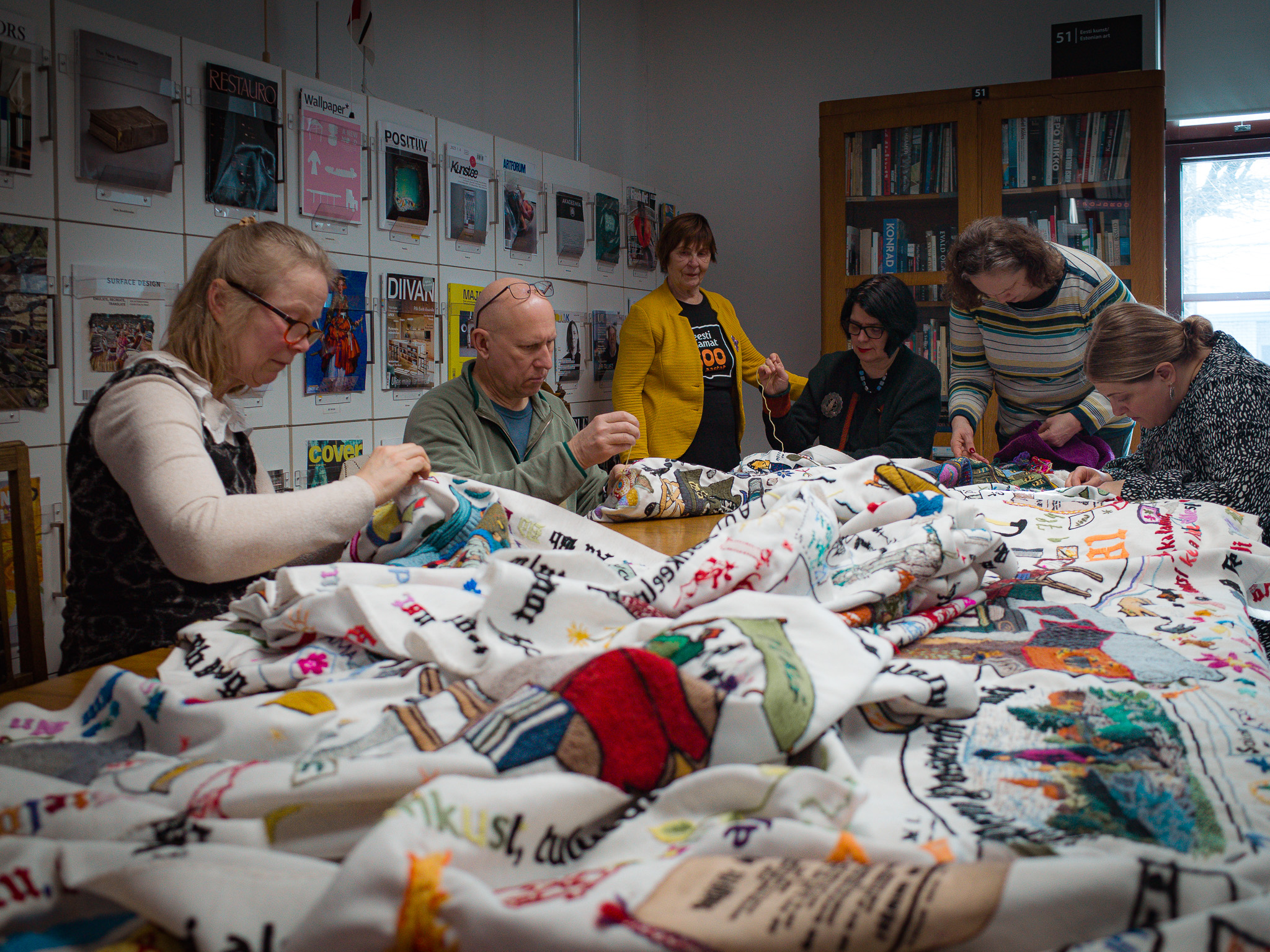
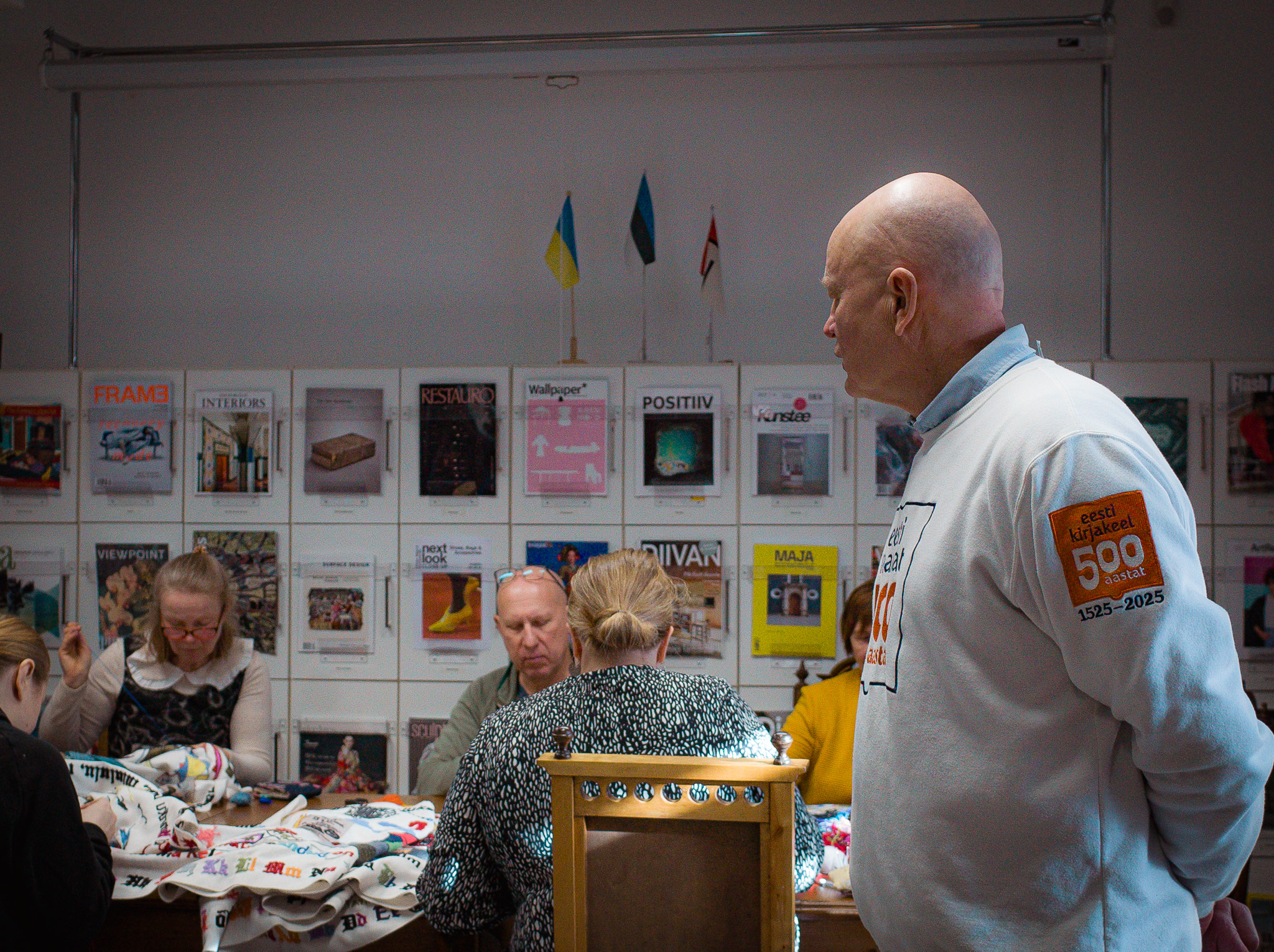
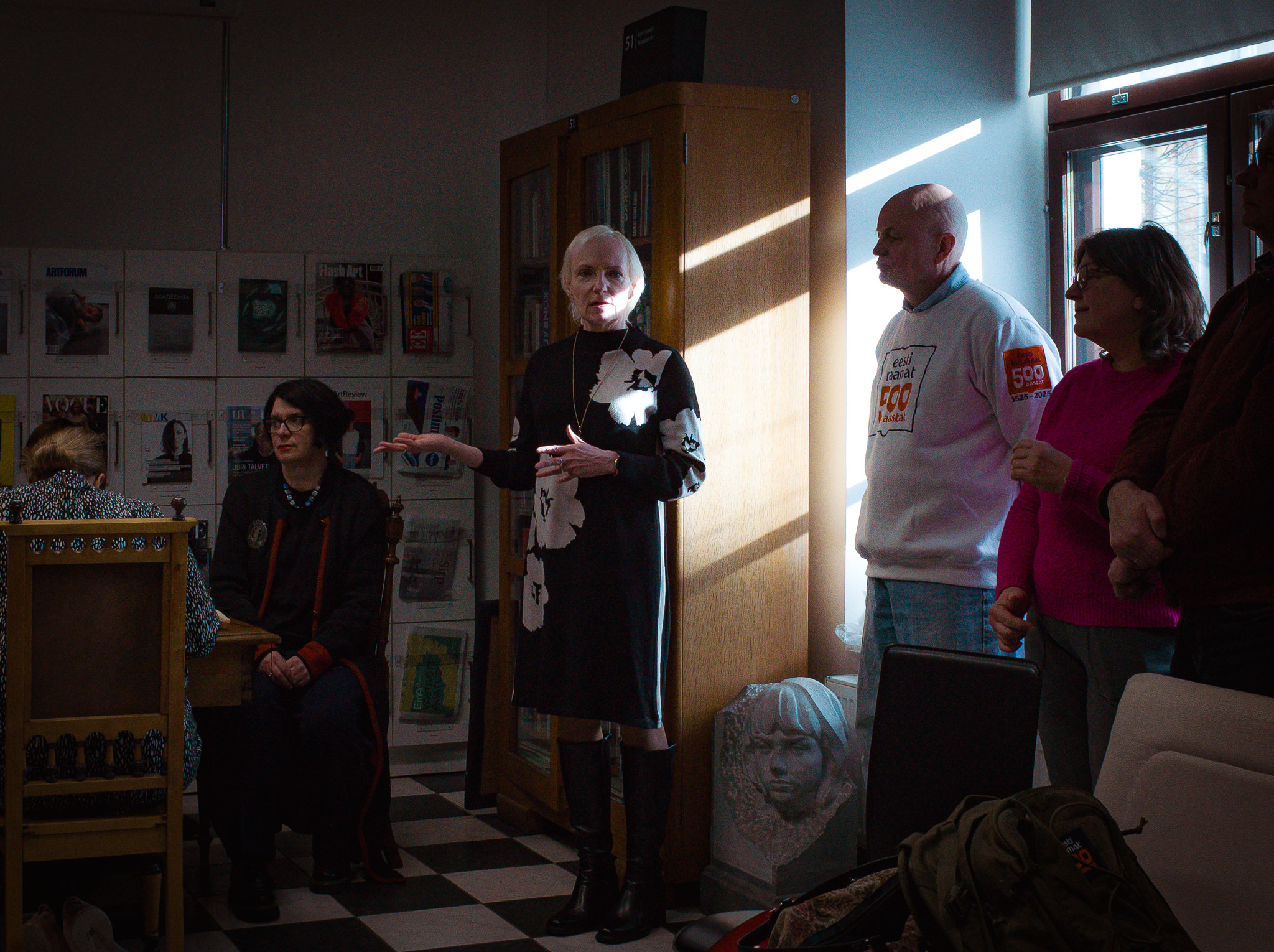
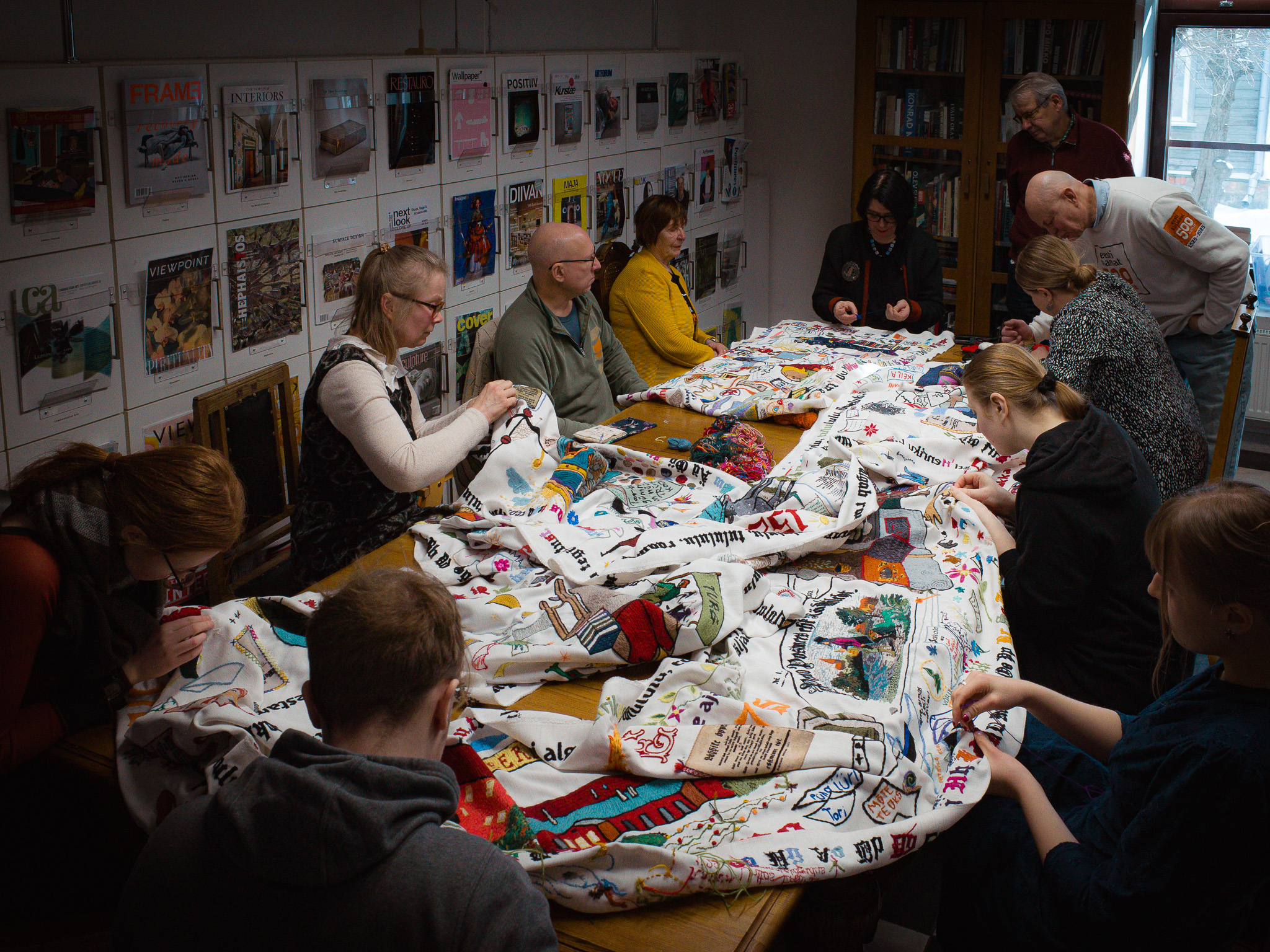
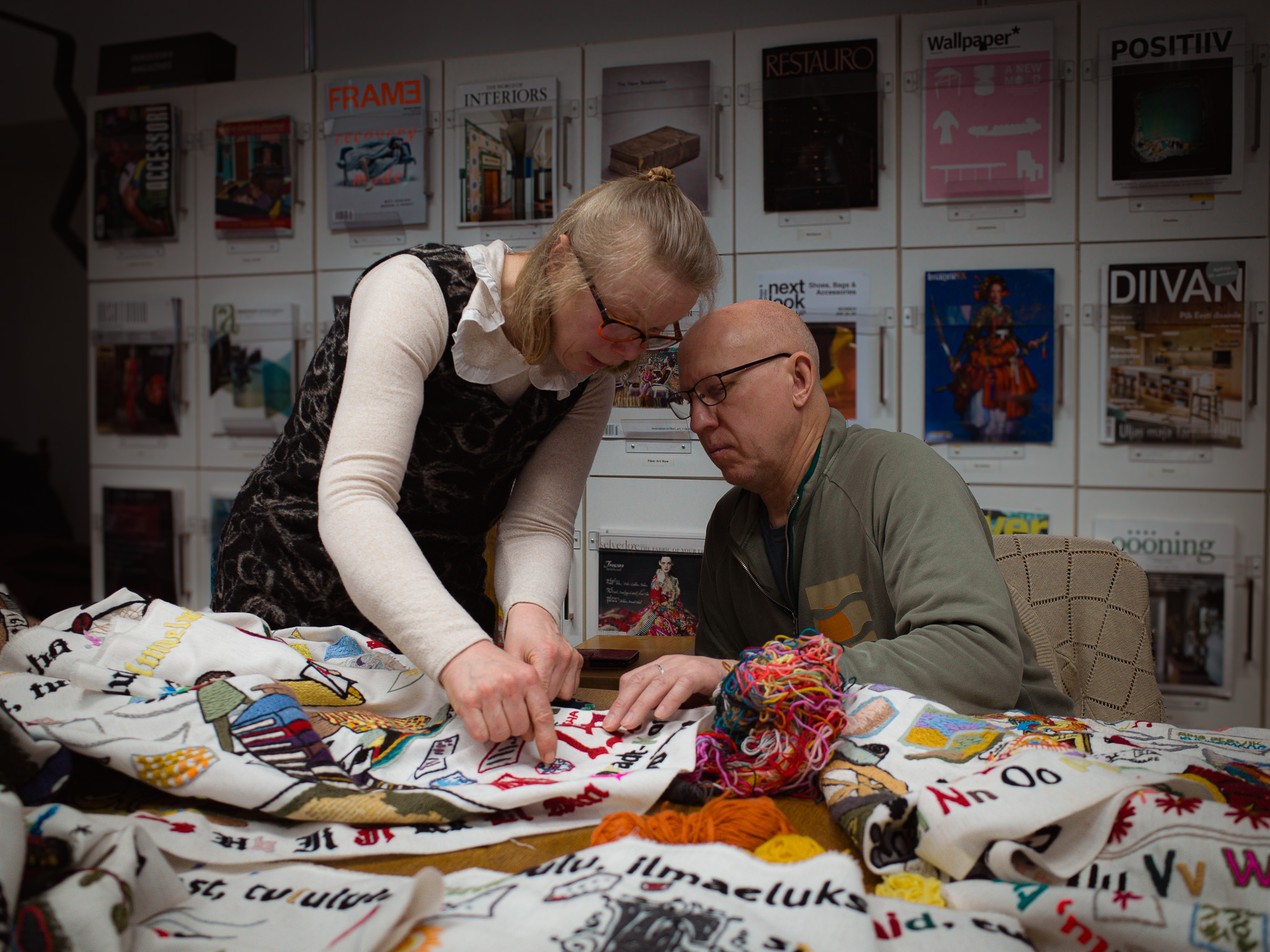
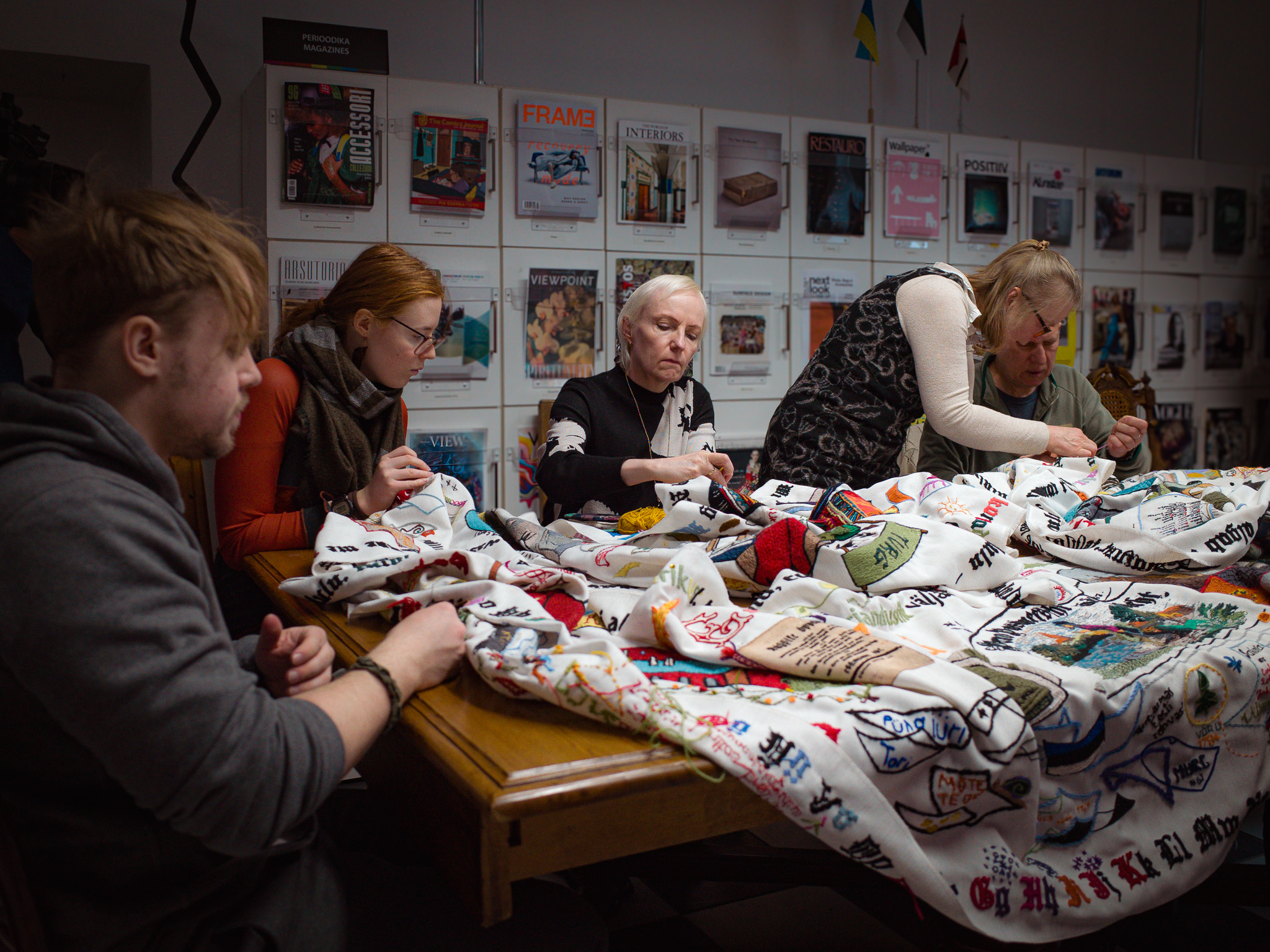
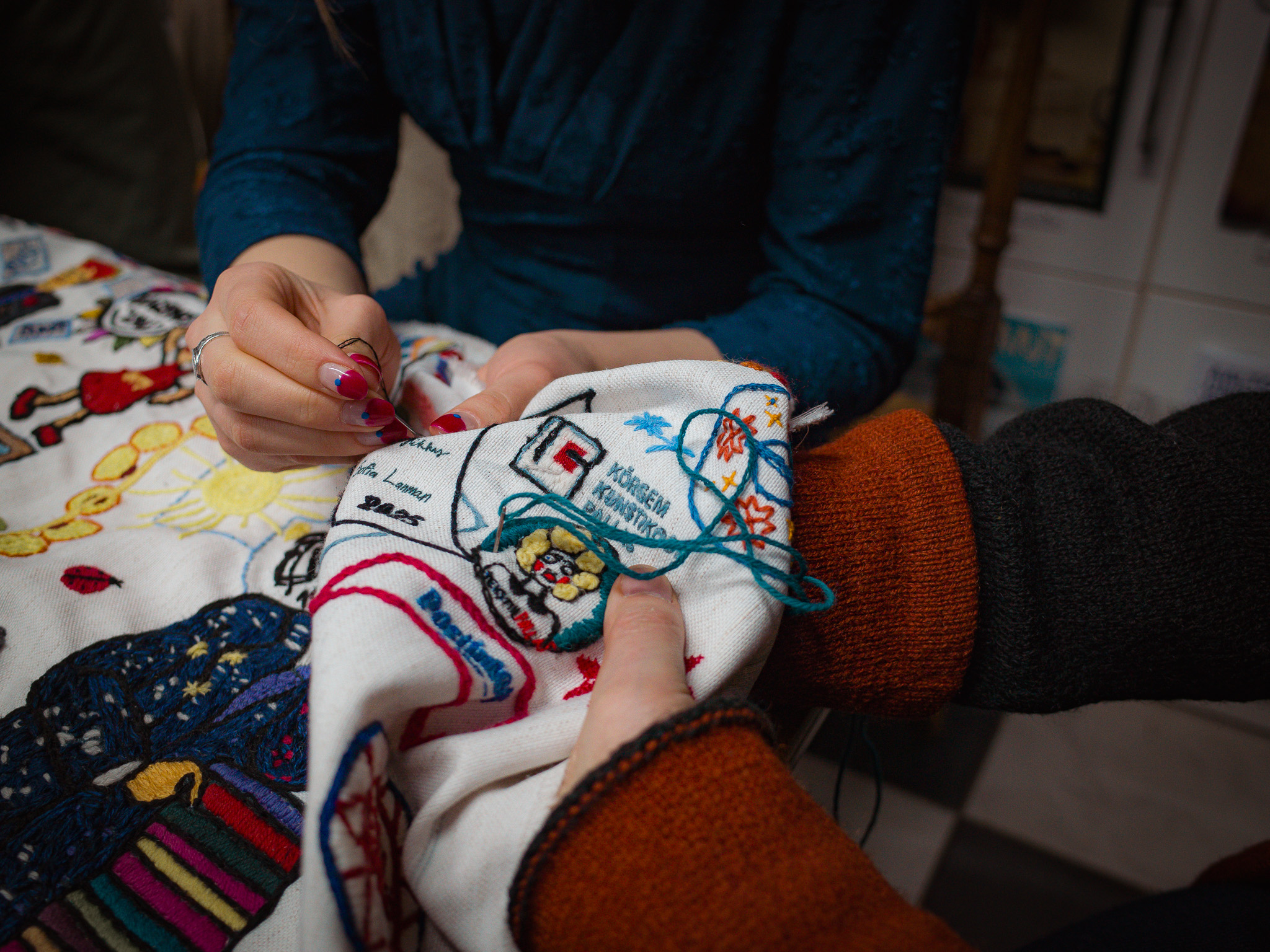
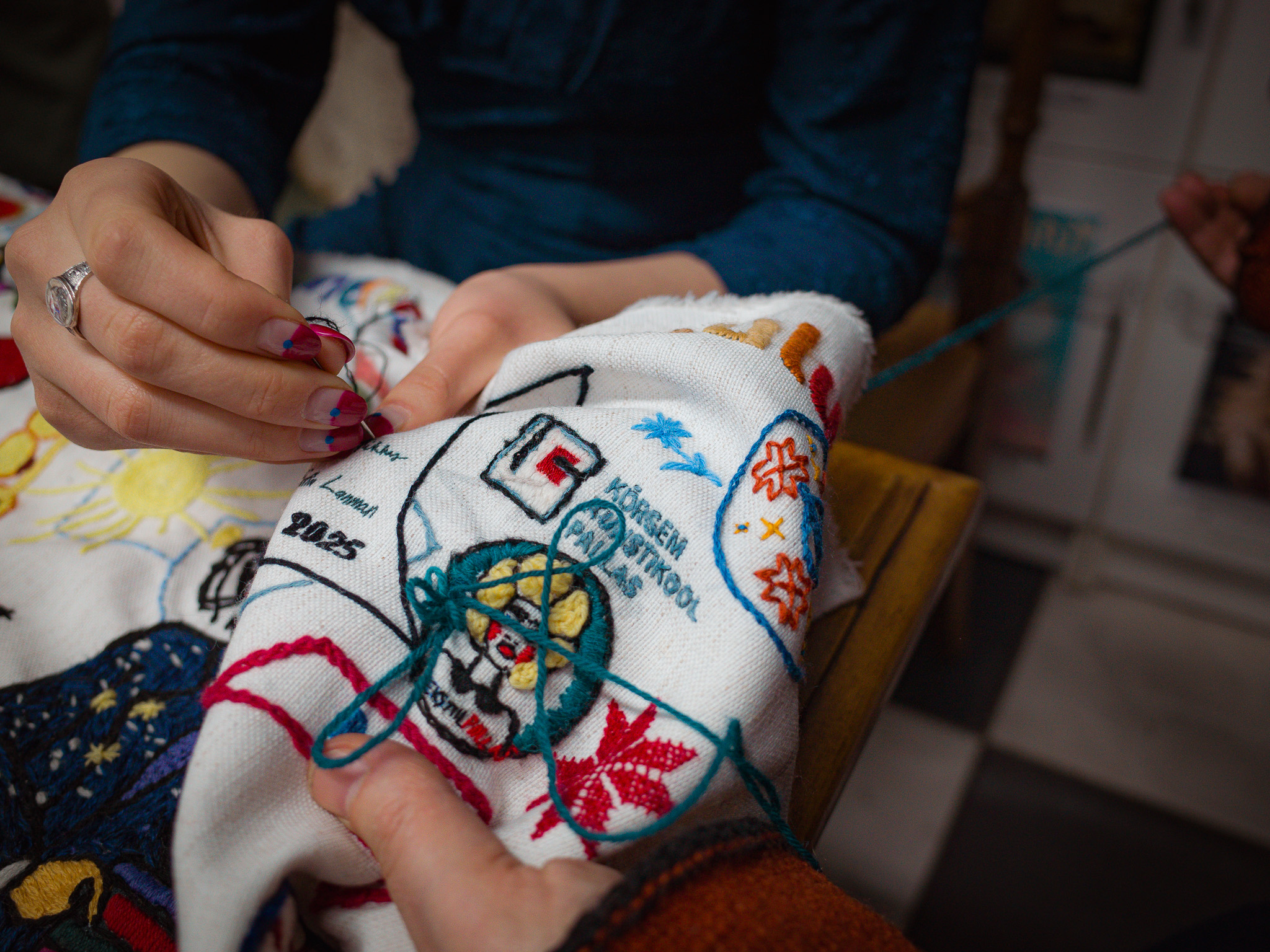
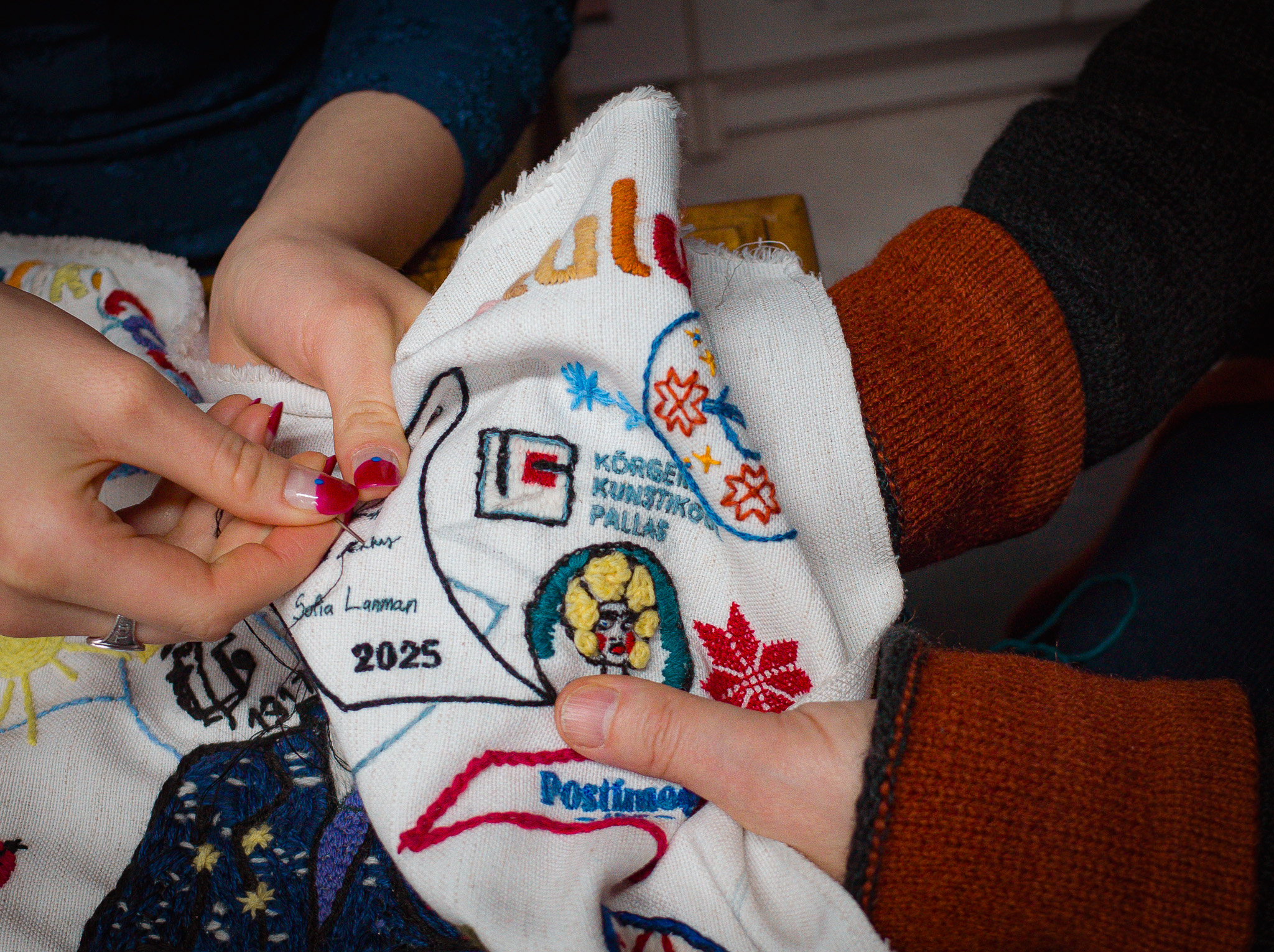
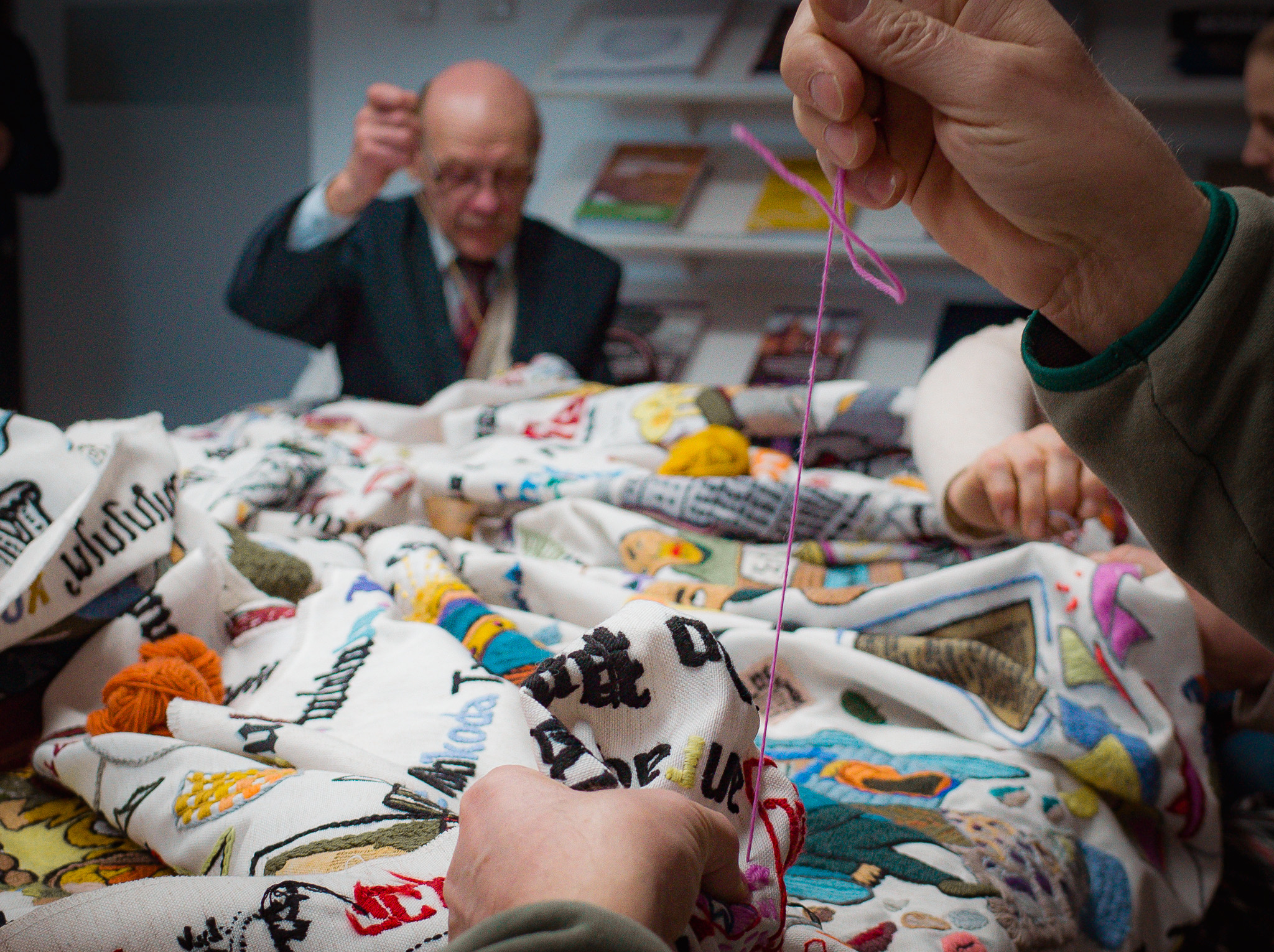
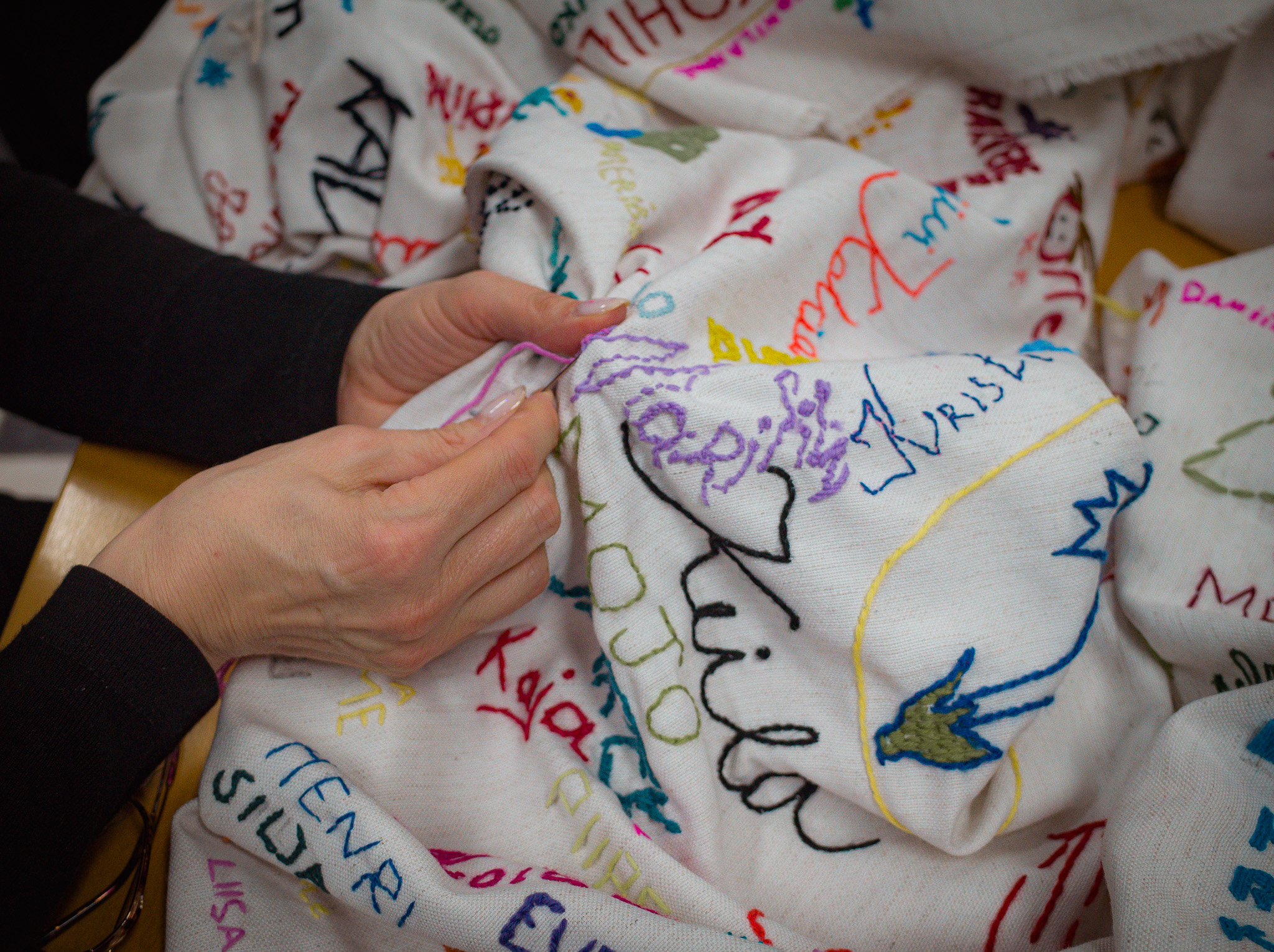
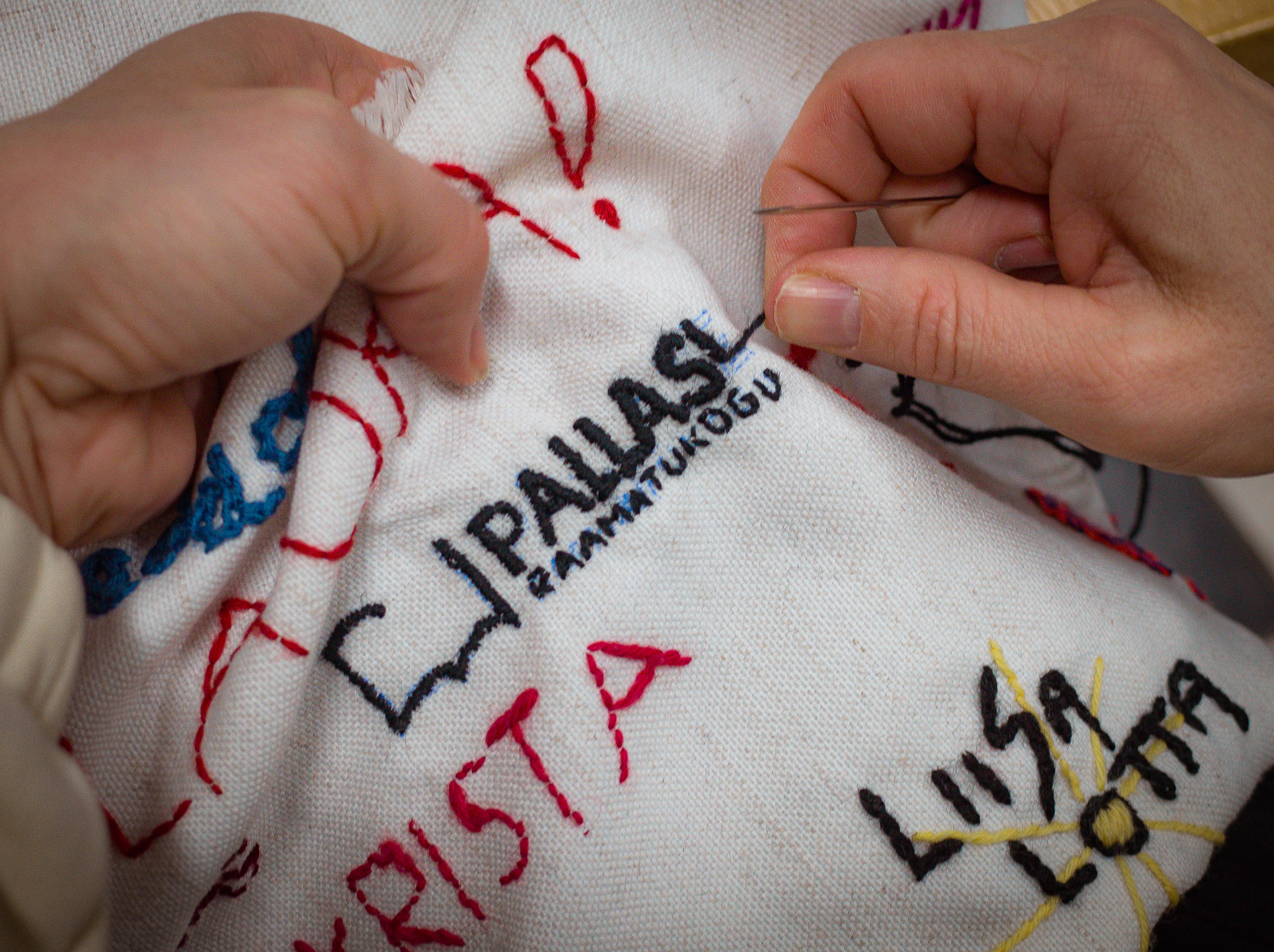
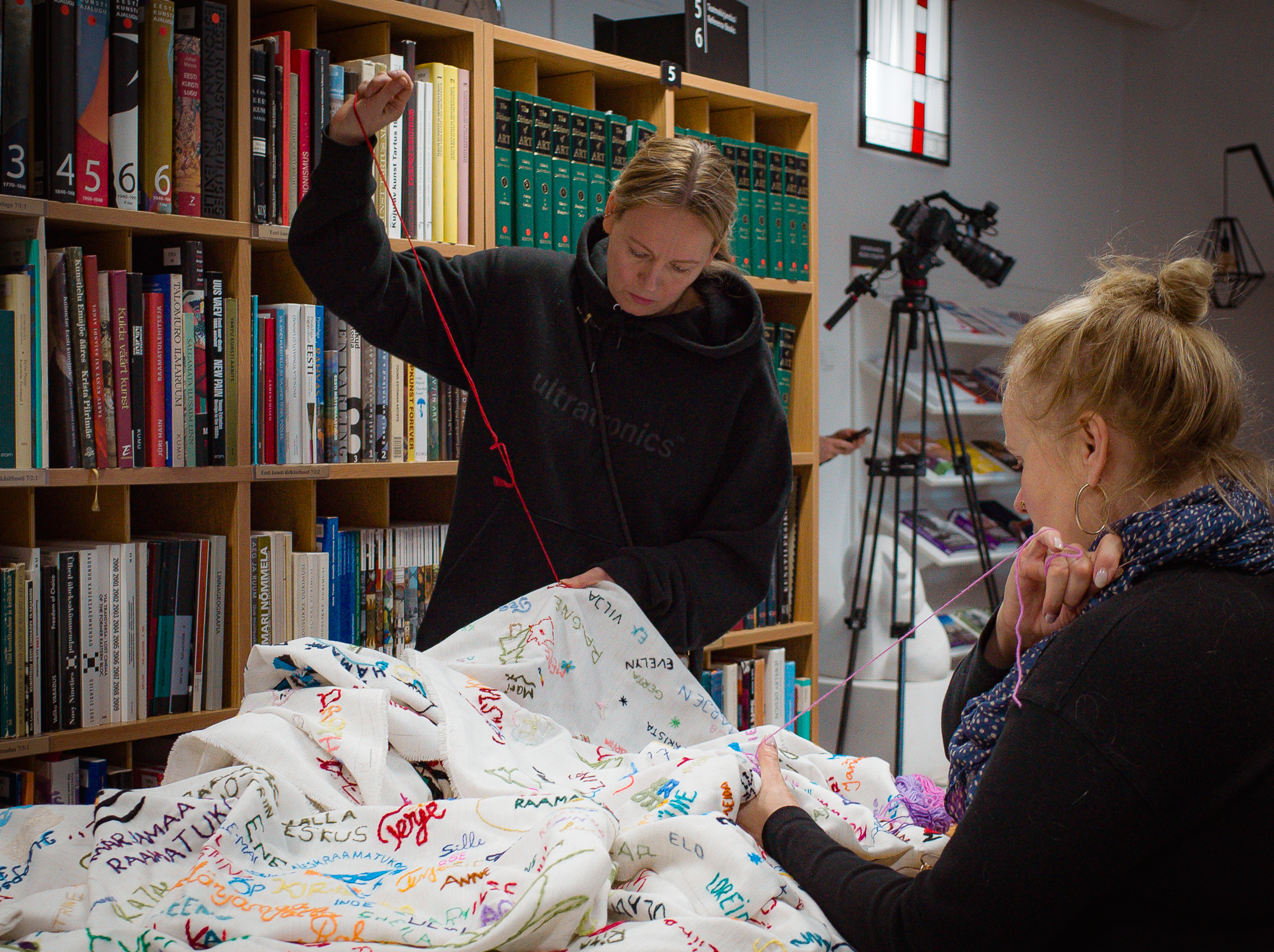
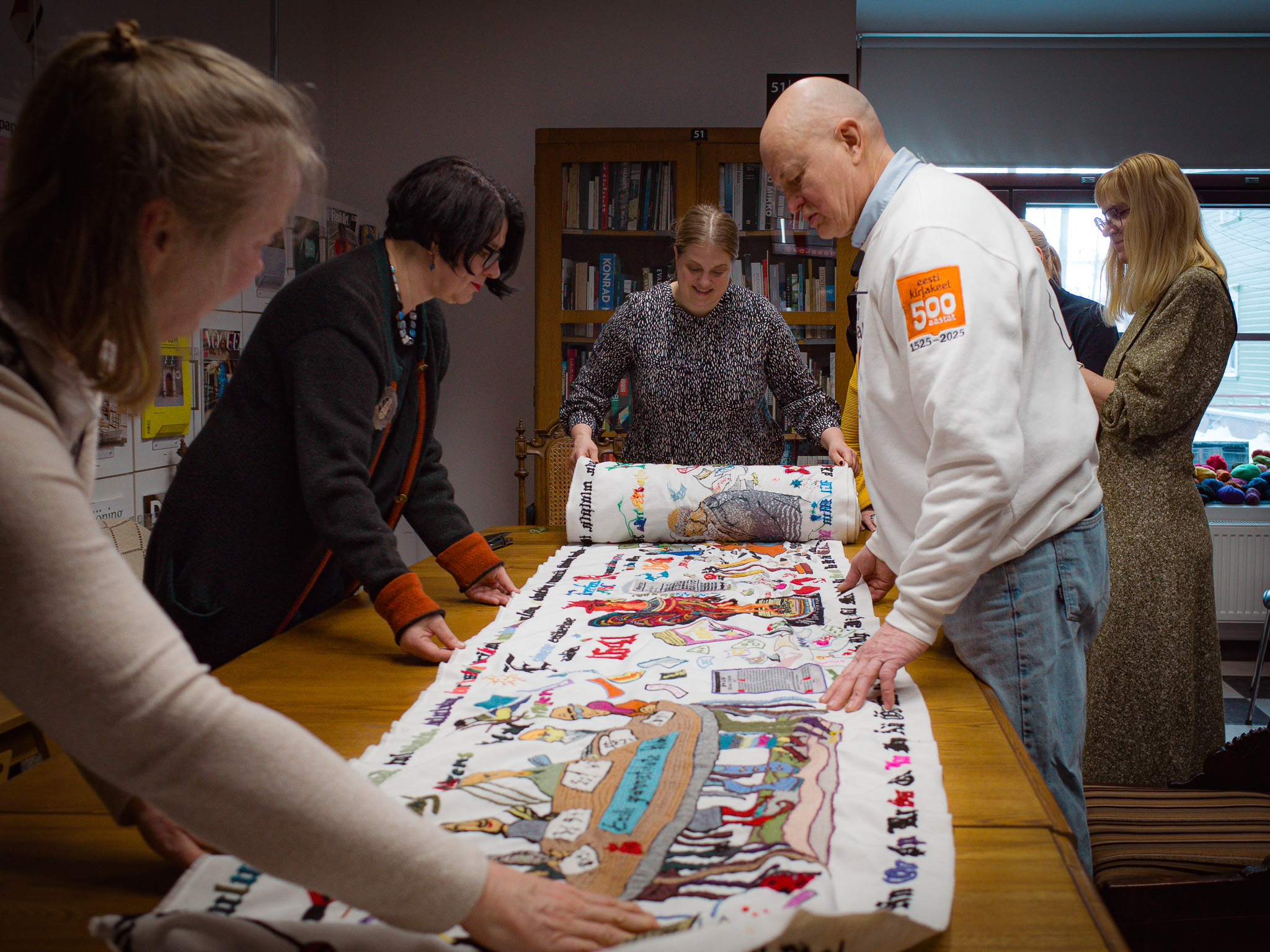
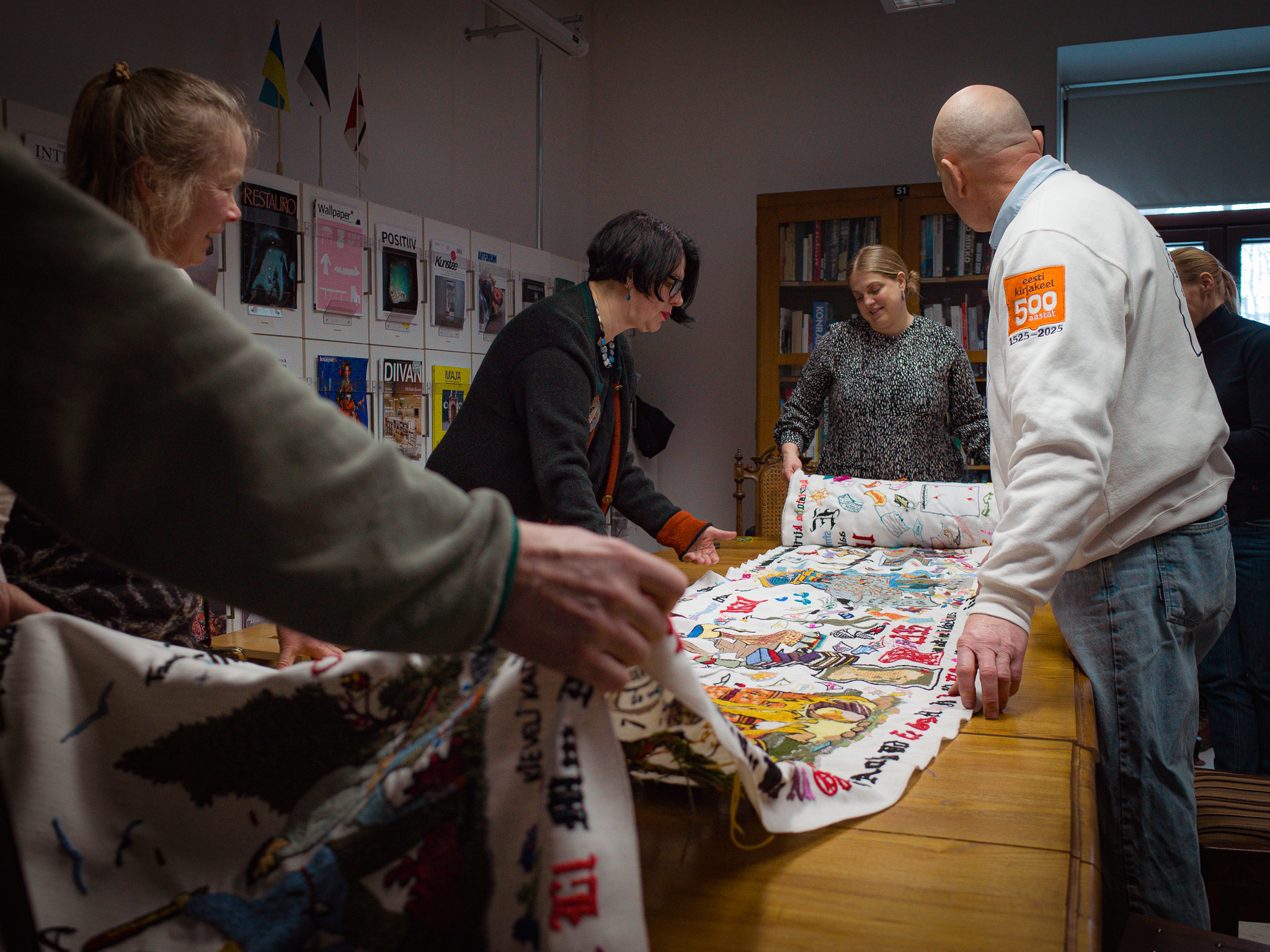
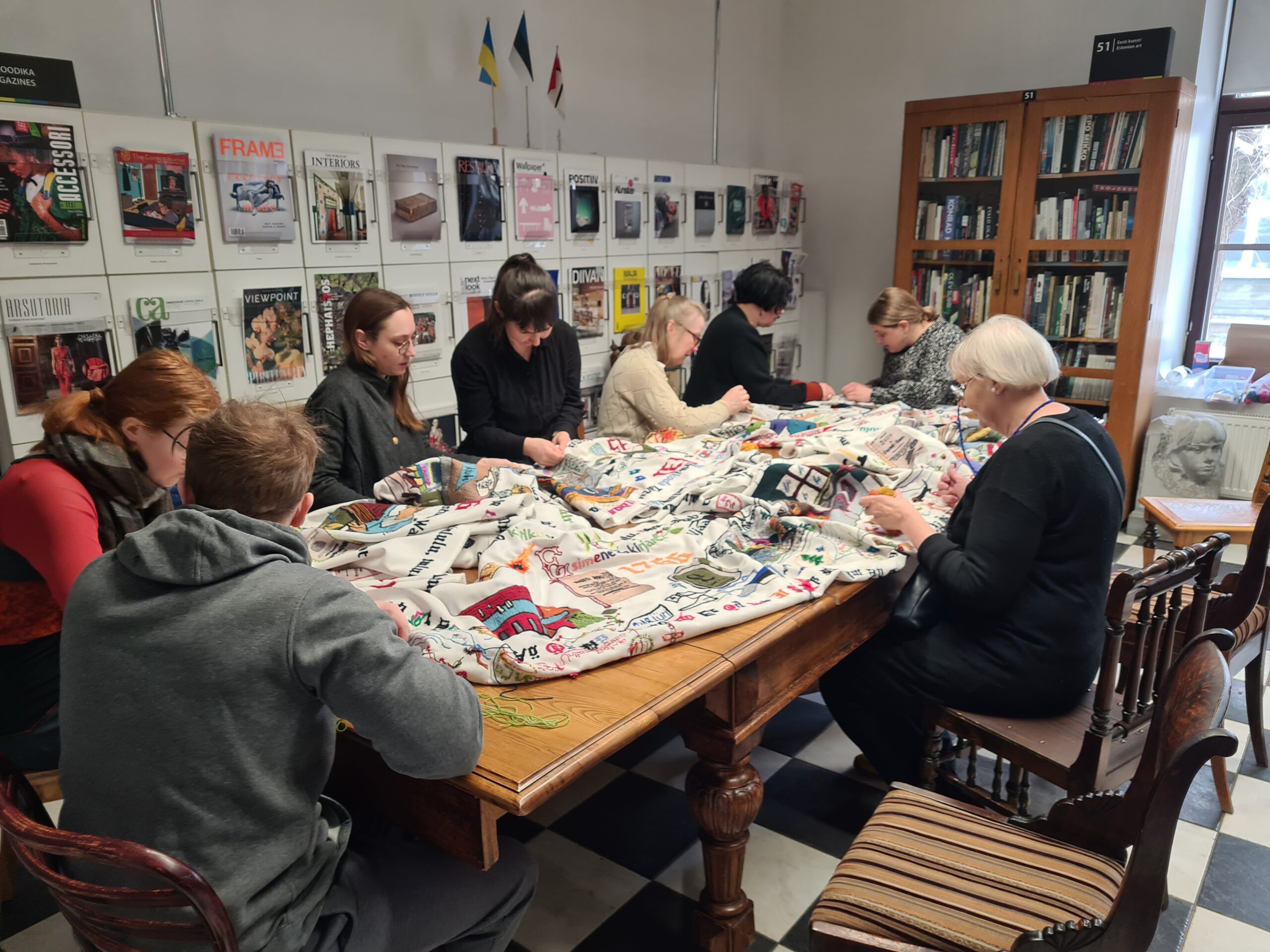


Esmaspäeval, 23. veebruaril kell 10–13 on Kõrgema Kunstikooli Pallas raamatukogus võimalus anda veel oma panus Eesti Raamatu Aasta piltvaiba valmimisse. Päev enne Eesti Vabariigi aastapäeva Pallases toimuv ühine tikkimine toob piltvaiba viimaste pistete tegemiseks tagasi selle sünnipaika ja tähistab üle-eestilise kogukonnaprojekti valmimist.
Eesti Raamatu Aasta piltvaiba „Eesti raamatu 500 aastat“ tikkimine sai alguse möödunud aasta 11. veebruaril Pallase raamatukogus. Sellele tegid esimesed tikkimispisted Vabariigi Presidendi abikaasa Sirje Karis, tekstiilikunstnik Anu Raud, kogu piltvaiba loomisele kaasa aidanud meeskond Pallasest, Eesti Raamatu Aasta peakomiteest ning Eesti Rahvakunsti ja Käsitöö Liidust. Nüüd naaseb piltvaip viimaste pistete tegemiseks alguspaika Pallases.
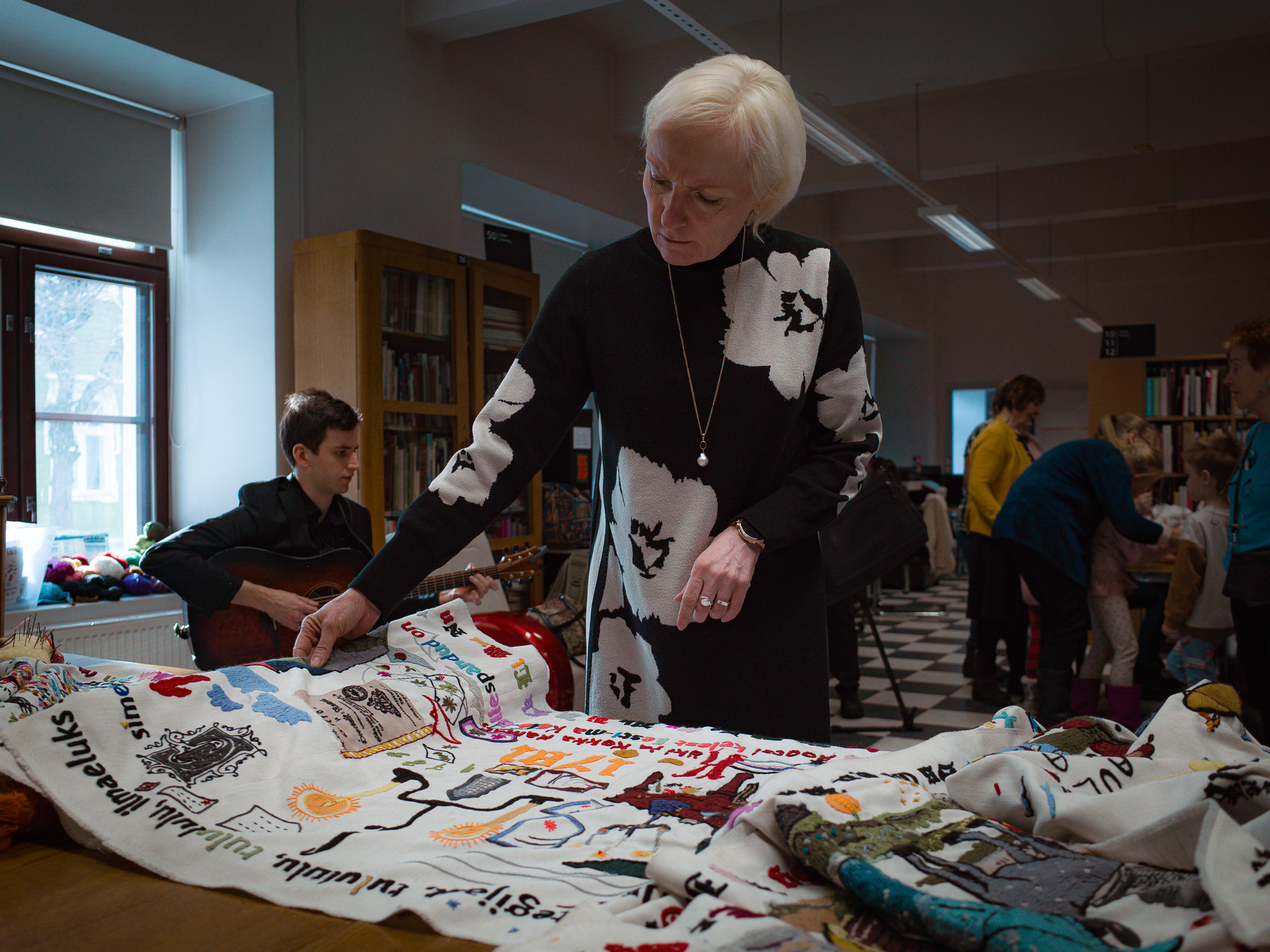
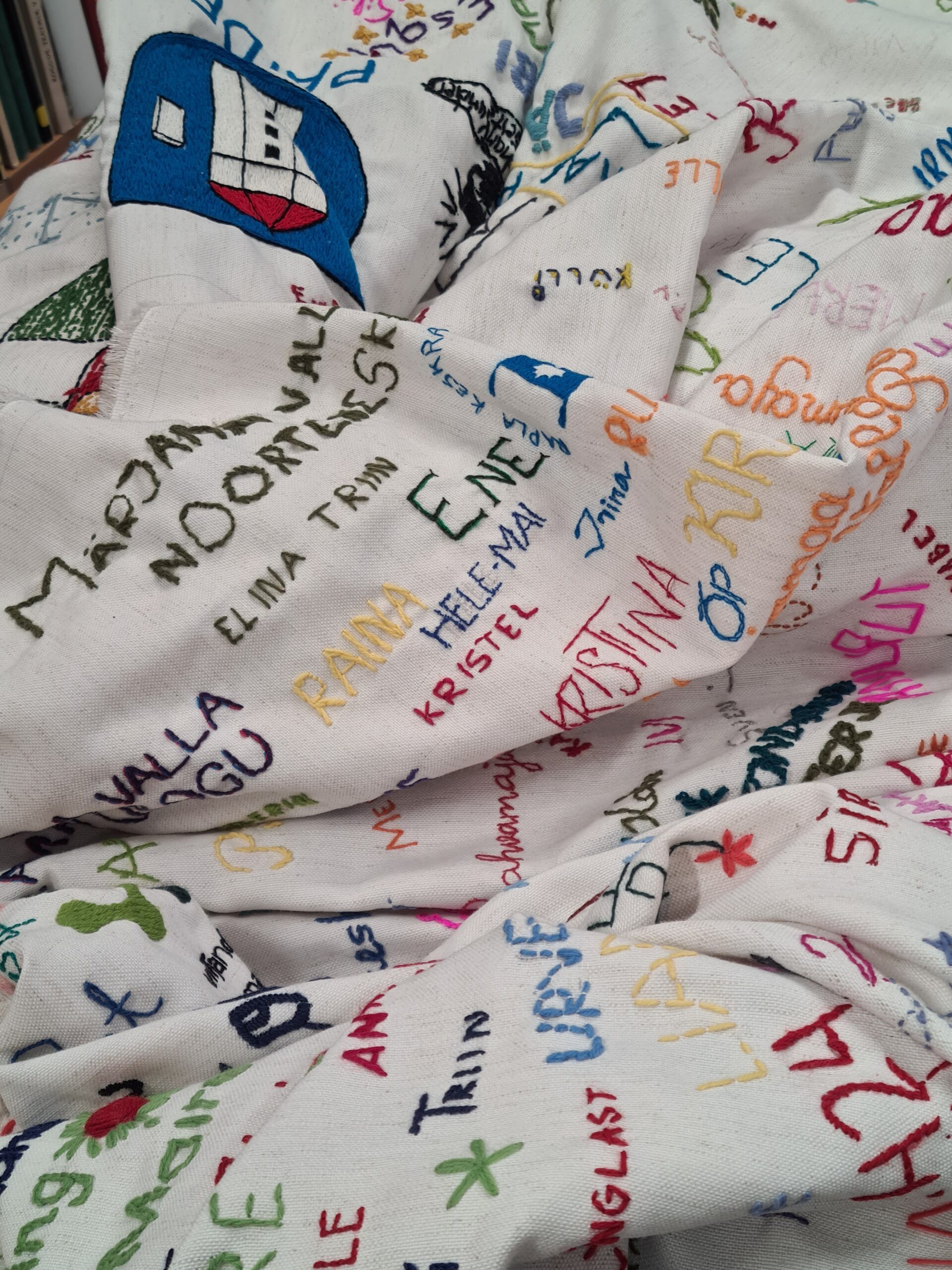
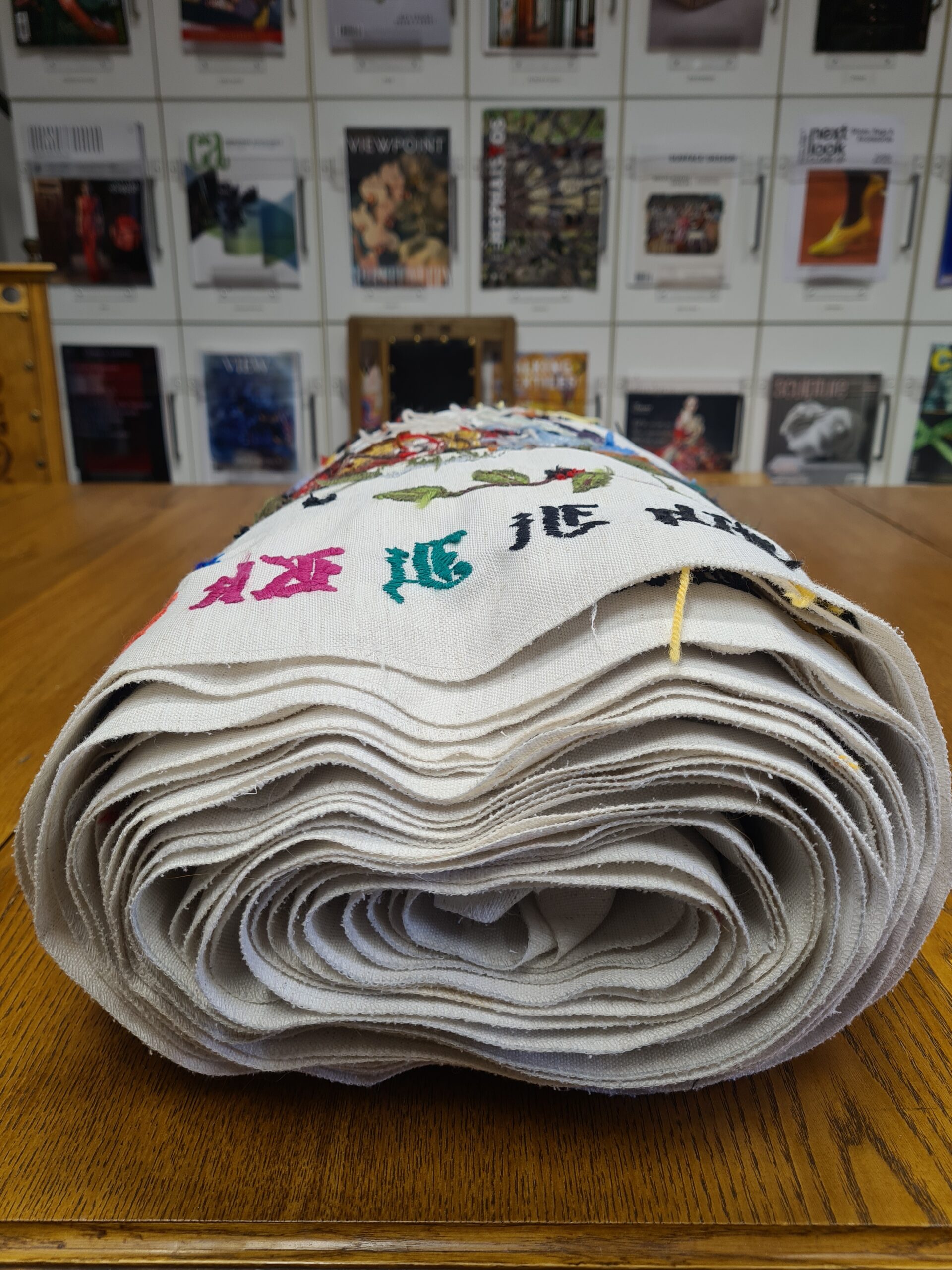
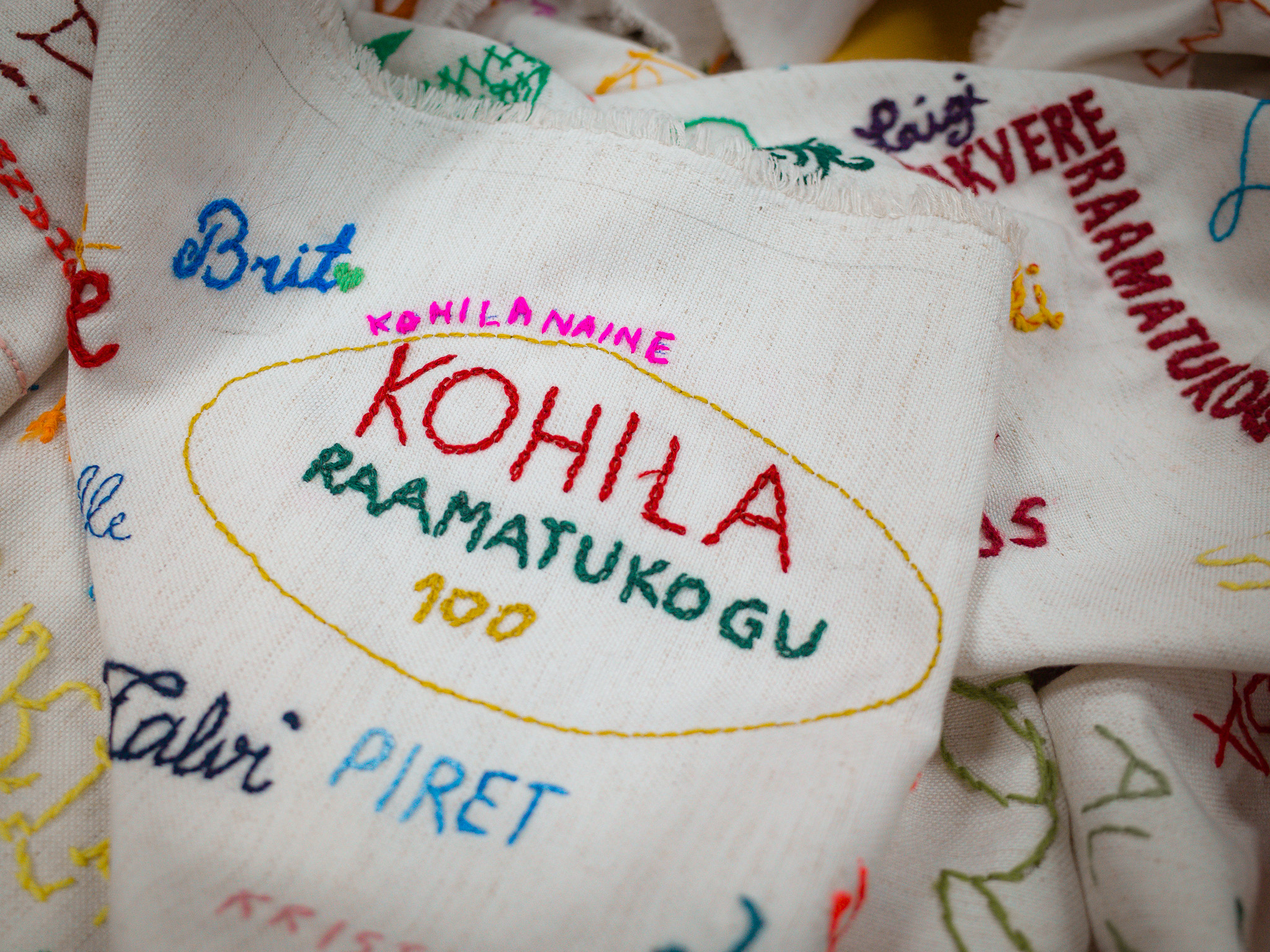
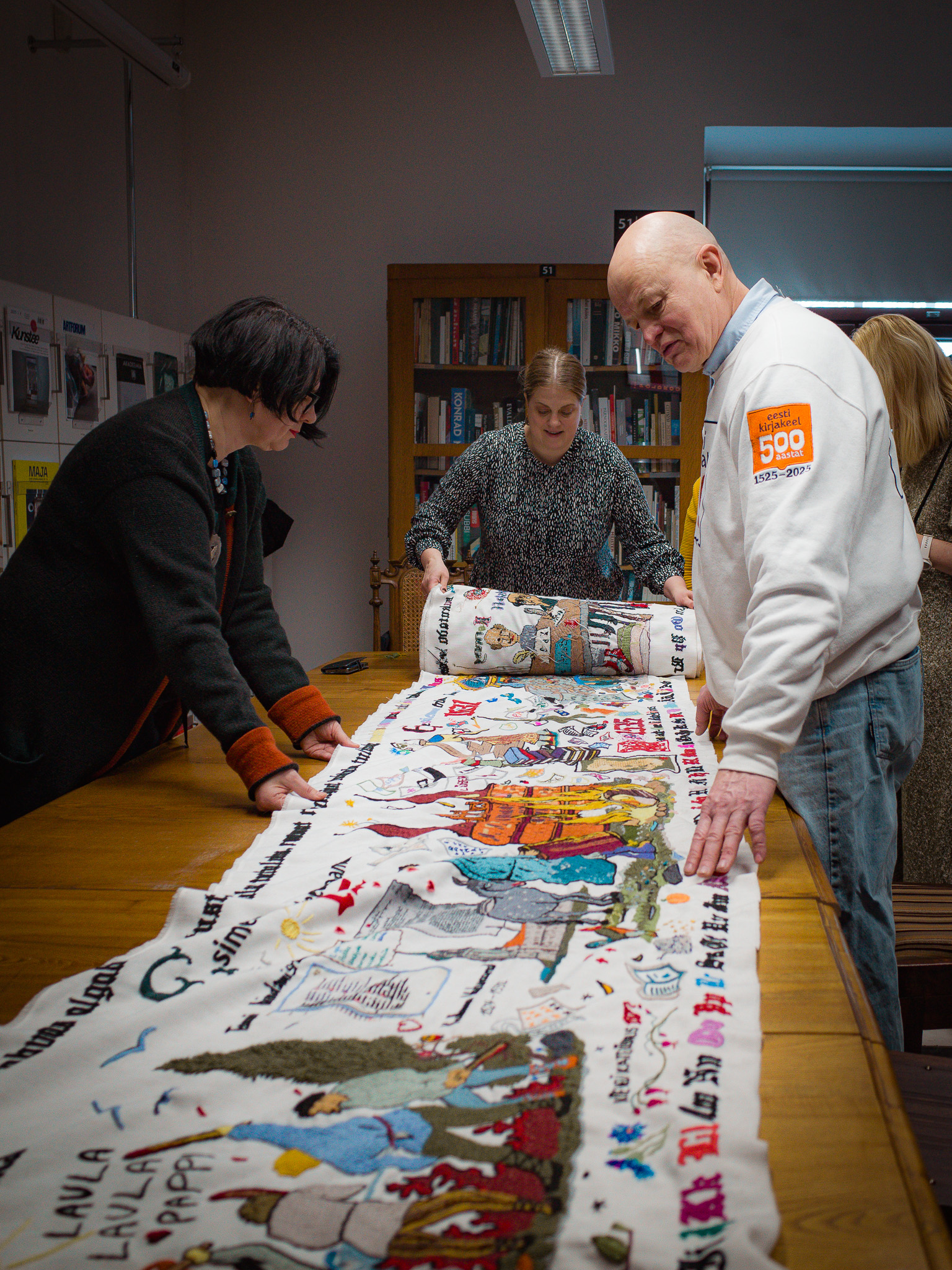
16,5-meetrine piltvaip kujutab Eesti raamatu ajaloos olulisi sündmusi, ühendades visuaalse jutustuse aastaarvude ja tekstiliste viidetega. Aasta jooksul rändas vaip läbi kõigi Eesti maakondade, peatudes raamatukogudes, kus huvilised said anda oma panuse ühisesse kultuurilukku. Vaiba tikkimise idee osutus väga kaasahaaravaks – tikkijaid on aasta jooksul kokku olnud tuhandeid. Nendest teadaolevalt on seni olnud kõige noorem tikkija 2-aastane ja kõige vanem 104-aastane ning vaip on läbinud Eestis ligi 3000 km. Vaiba tikkimise mõte osutus nii populaarseks, et eraldi osadena prinditi vaibast teine koopia ja saadeti need mitmesse riiki väliseestlastele.
Piltvaiba kujundasid Pallase tekstiiliosakonna IV kursuse tudengid (tänaseks vilistlased) Brigitte Mihkelson, Inger Tammela, Kristiin Kuuslap, Marite Rikkas ja Sofia Lanman, juhendas Marju Roos. Projekti juhtis tekstiiliosakonna juhataja professor Aet Ollisaar. Piltvaibal kujutatud sündmuste valiku tegid Krista Aru ja Mart Jagomägi, kelle algatusel sündis ka idee tähistada Eesti raamatu 500-aastast ajalugu ühiselt valmiva piltvaibaga.
Tikkimine toimus koostöös Eesti Rahvakunsti ja Käsitöö Liiduga, kes valmistas ka juhendava video. Tikkimise eksperdina panustas Lembe Maria Sihvre ning projekti üldkorraldust toetas Liina Veskimägi-Iliste. Vaiba kujundus trükiti kangale KIU Kangatrüki Stuudios.
On Monday, February 23, 2026, the library of Pallas University of Applied Sciences will offer opportunity to contribute to the completion of the Year of the Estonian Book tapestry. The joint embroidery event at Pallas brings the tapestry back to its birthplace for the final stitches and marks the completion of this nationwide community project.
The embroidery of the Year of the Estonian Book tapestry, “500 Years of the Estonian Book,” began on February 11 last year in the Pallas library. The first stitches were made by Sirje Karis, spouse of the President of the Republic of Estonia; textile artist Anu Raud; and representatives of Pallas, the Year of the Estonian Book steering committee, and the Estonian Folk Art and Craft Union, all of whom contributed to bringing the project to life. The tapestry now returns to Pallas for its final stitches.
Measuring 16.5 meters in length, the tapestry depicts key events in the history of the Estonian book, combining a visual narrative with dates and textual references. Over the past year, it has traveled through all counties of Estonia, stopping in libraries where people were invited to contribute to this shared cultural story. The initiative proved highly engaging, with thousands of participants taking part in the embroidery. The youngest known participant was two years old and the oldest 104. In total, the tapestry has traveled nearly 3,000 kilometers across Estonia. Due to its popularity, a second printed version of the tapestry was produced in separate sections and sent to Estonian communities abroad in several countries.
The tapestry was designed by fourth-year students (now alumni) of the Pallas Textile Department—Brigitte Mihkelson, Inger Tammela, Kristiin Kuuslap, Marite Rikkas, and Sofia Lanman—under the supervision of Marju Roos. The project was led by Professor Aet Ollisaar, Head of the Textile Department. The selection of events depicted on the tapestry was made by Krista Aru and Mart Jagomägi, who also initiated the idea of marking 500 years of the Estonian book with a collaboratively created tapestry.
The embroidery process was carried out in cooperation with the Estonian Folk Art and Craft Union, which also produced an instructional video. Expert guidance was provided by Lembe Maria Sihvre, and overall project coordination was supported by Liina Veskimägi-Iliste. The tapestry design was printed onto fabric at KIU Kangatrüki Stuudio.