
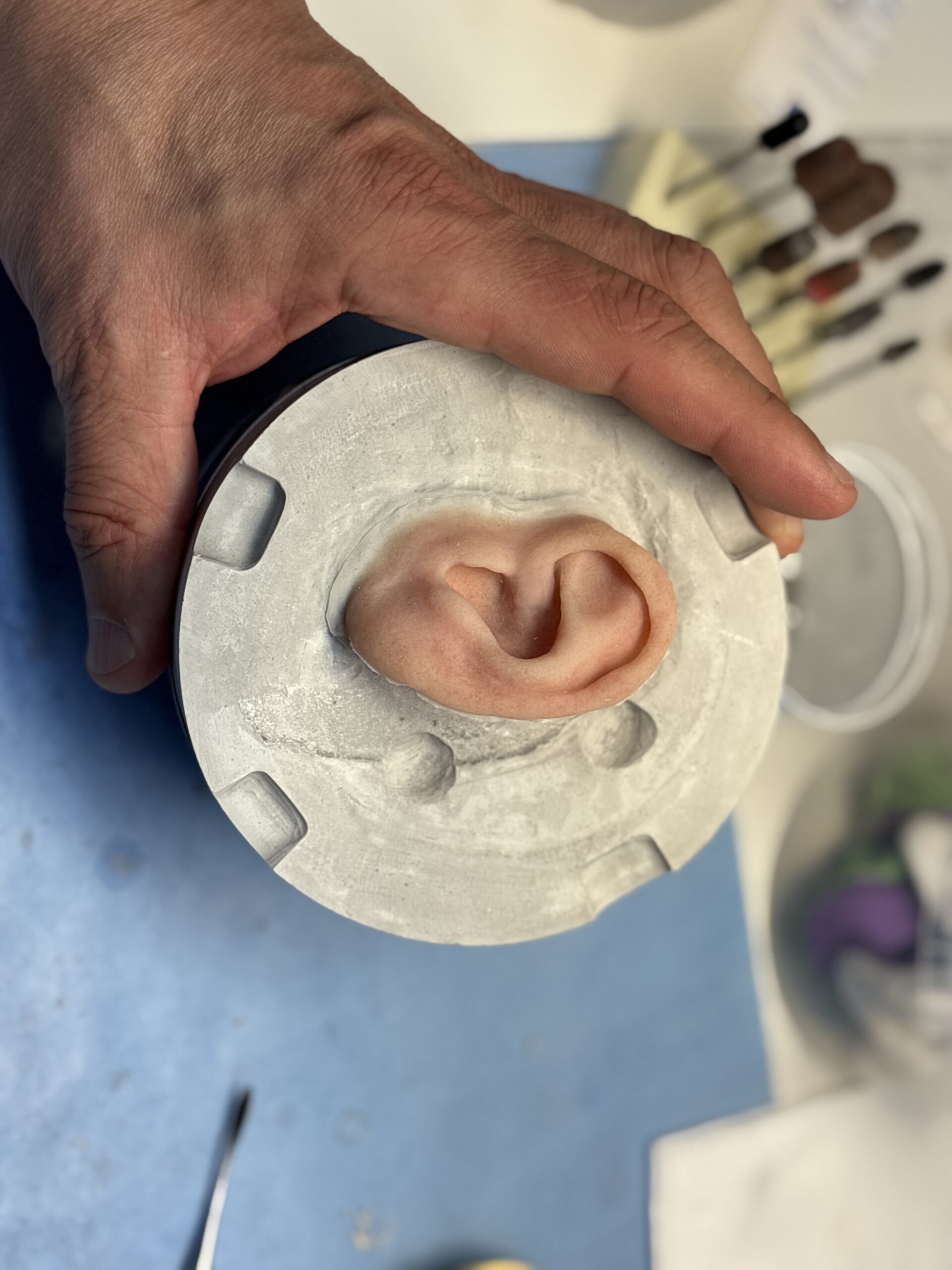
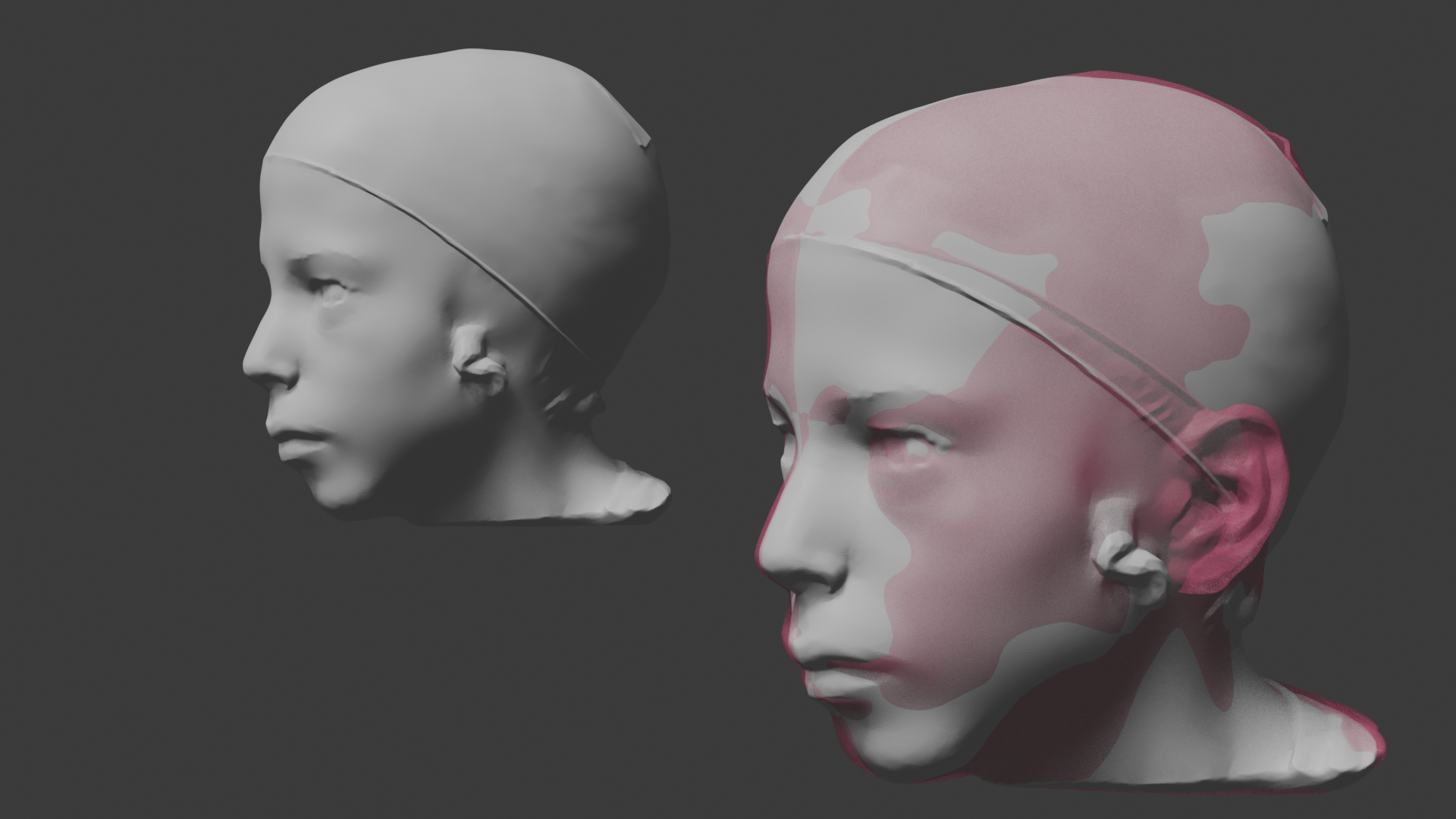


Näotraumad, operatsioonijärgsed defektid ja kaasasündinud anomaaliad võivad kujundada sotsiaalselt tajutavat „teistsugusust“, mõjutades inimese identiteeti ja sotsiaalseid suhteid. Nägu on kommunikatsiooni keskne element ning selle muutused häirivad emotsioonide ja suhtluse tavapärast „loetavust“. Epitees aitab vähendada tähelepanu defektile ja taastada suhtluse loomulikkuse, mis on eriti oluline digikeskkonnas (näiteks Zoomis).
Töö eesmärk oli töötada välja individuaalne magnetkinnitusega kõrvaepitees III astme mikrootiaga patsiendile ning analüüsida epiteesimise arendamise võimalusi Eestis. Töö ühendab meditsiini ja skulptuuri, näidates, et epitees ei ole üksnes meditsiiniline lahendus, vaid ka sotsiaalne vahend, mis aitab taastada patsiendi elukvaliteeti ja toetab tema identiteeditunde taastumist.
Facial trauma, postoperative defects, and congenital anomalies may create a socially perceived sense of “otherness,” affecting a person’s identity and social relationships. The face is a central element of human communication, and alterations to it may disrupt the conventional “readability” of emotions and interpersonal interaction. An epithesis helps reduce attention directed toward the defect and restores the naturalness of communication, which is especially important in digital environments (for example, Zoom).
The aim of this thesis was to develop an individualized magnet-retained ear epithesis for a patient with grade III microtia and to analyse the possibilities for developing epithesis services in Estonia. The work combines medicine and sculpture, demonstrating that an epithesis is not only a medical solution but also a social instrument that contributes to restoring the patient’s quality of life and supports the recovery of personal identity.
