


Lõputöös uurisin noore kunstniku positsiooni kunstiväljal, keskendudes eelarvamustele, mida võetakse kui loomingulisi ja majanduslikke valikuid mõjutavaid kirjutamata reegleid. Töö lähtekohaks oli küsimus, kas kunstnik peab valima vabakunsti ja kommertskunsti vahel või on võimalik kunstnikul need praktikad ühendada oma identiteeti ohverdamata.
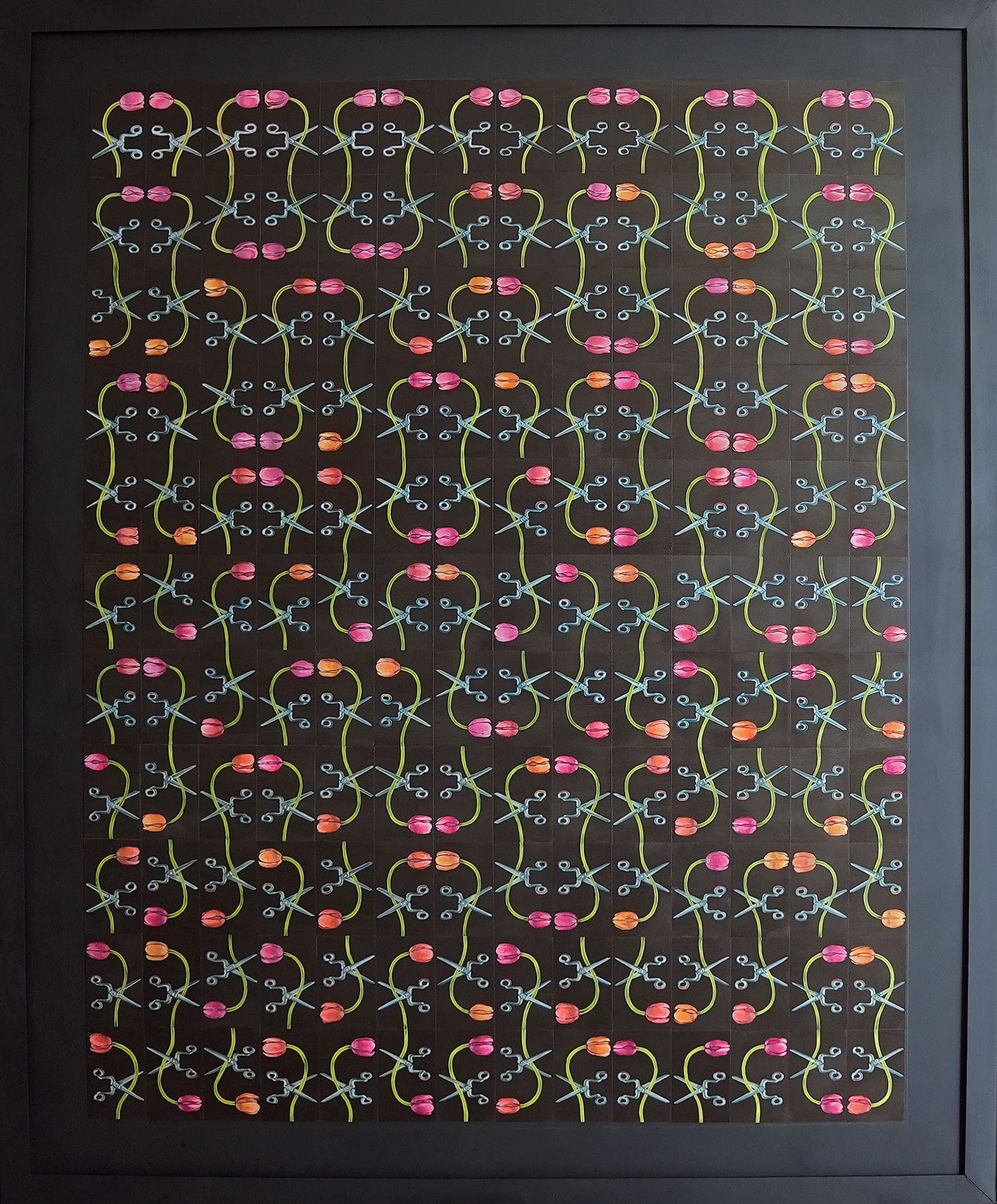
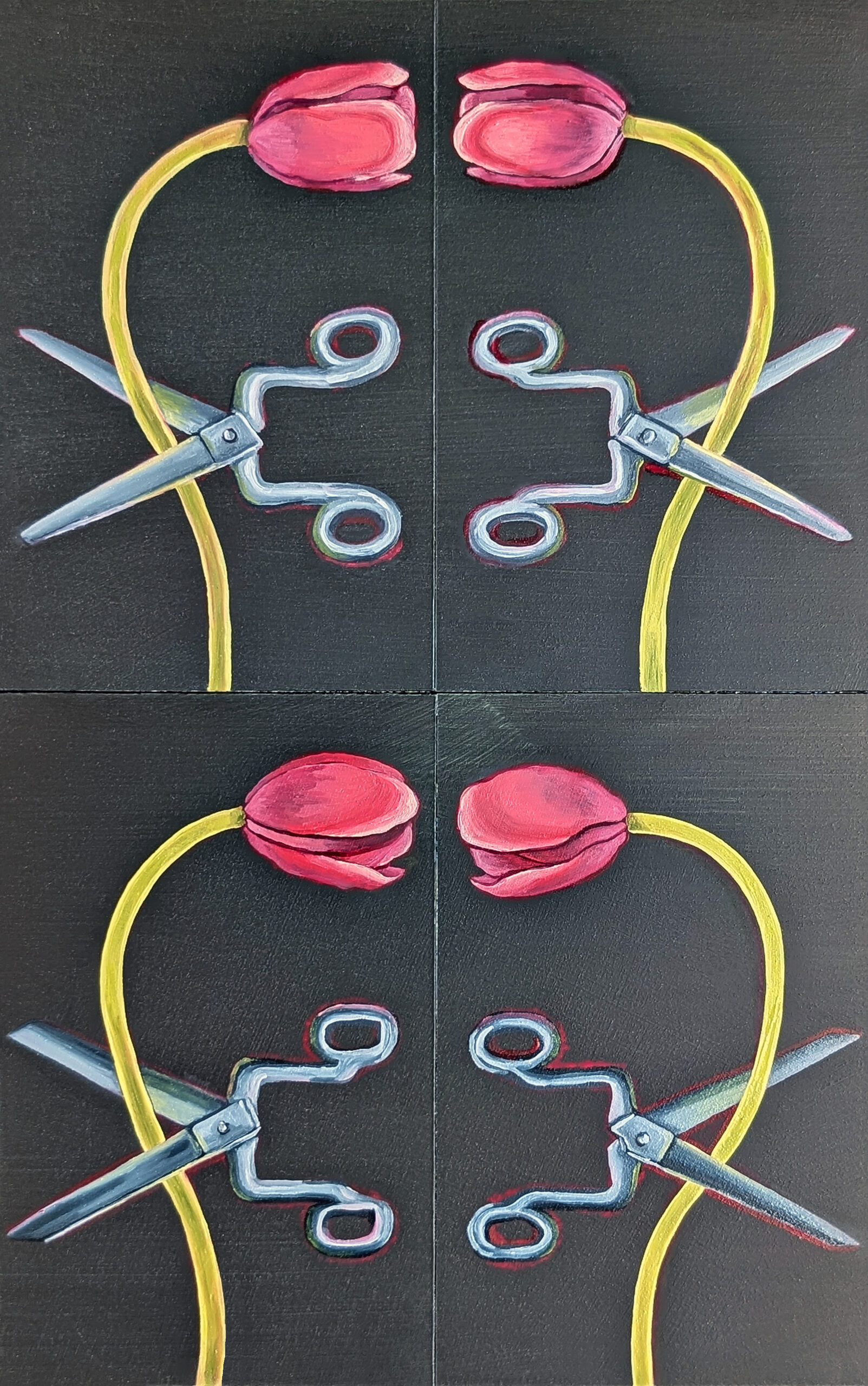
Teoreetilise tausta loomiseks intervjueerisin Pallase vilistlastest kunstnikke ja noore kunstiga kokkupuutuvaid kunstivälja osalisi ning analüüsisin kogutud materjali. Töö praktiliseks väljundiks on kontseptuaalne maal, milles magnetid sümboliseerivad kommertskunsti, viidates kunstniku kogetavatele „kääridele“ vabakunsti ideaalide ja kunstituru vahel.
In my final project, I examined the position of the young artist in the art field, focusing on prejudices that are taken as unwritten rules influencing creative and economic choices. The starting point of the work was the question of whether an artist must choose between fine art and commercial art, or whether it is possible for an artist to combine these practices without sacrificing their identity.
To create the theoretical background, I interviewed artists who are alumni of Pallas and participants in the art field who relate to young art and analysed the collected material. The practical outcome of the work is a conceptual painting in which magnets symbolise commercial art, referring to the “split” experienced by the artist between the ideals of fine art and the art market.
