
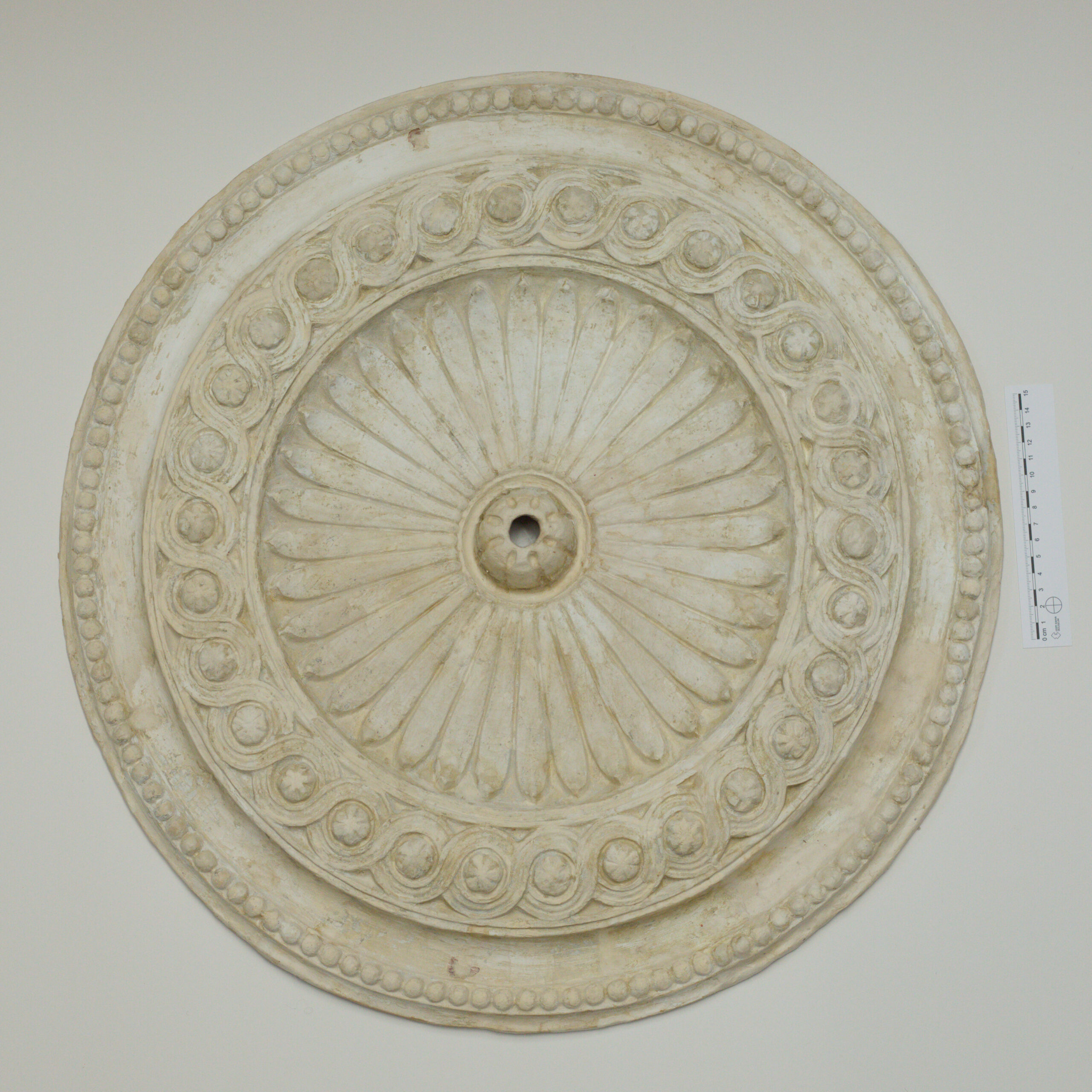
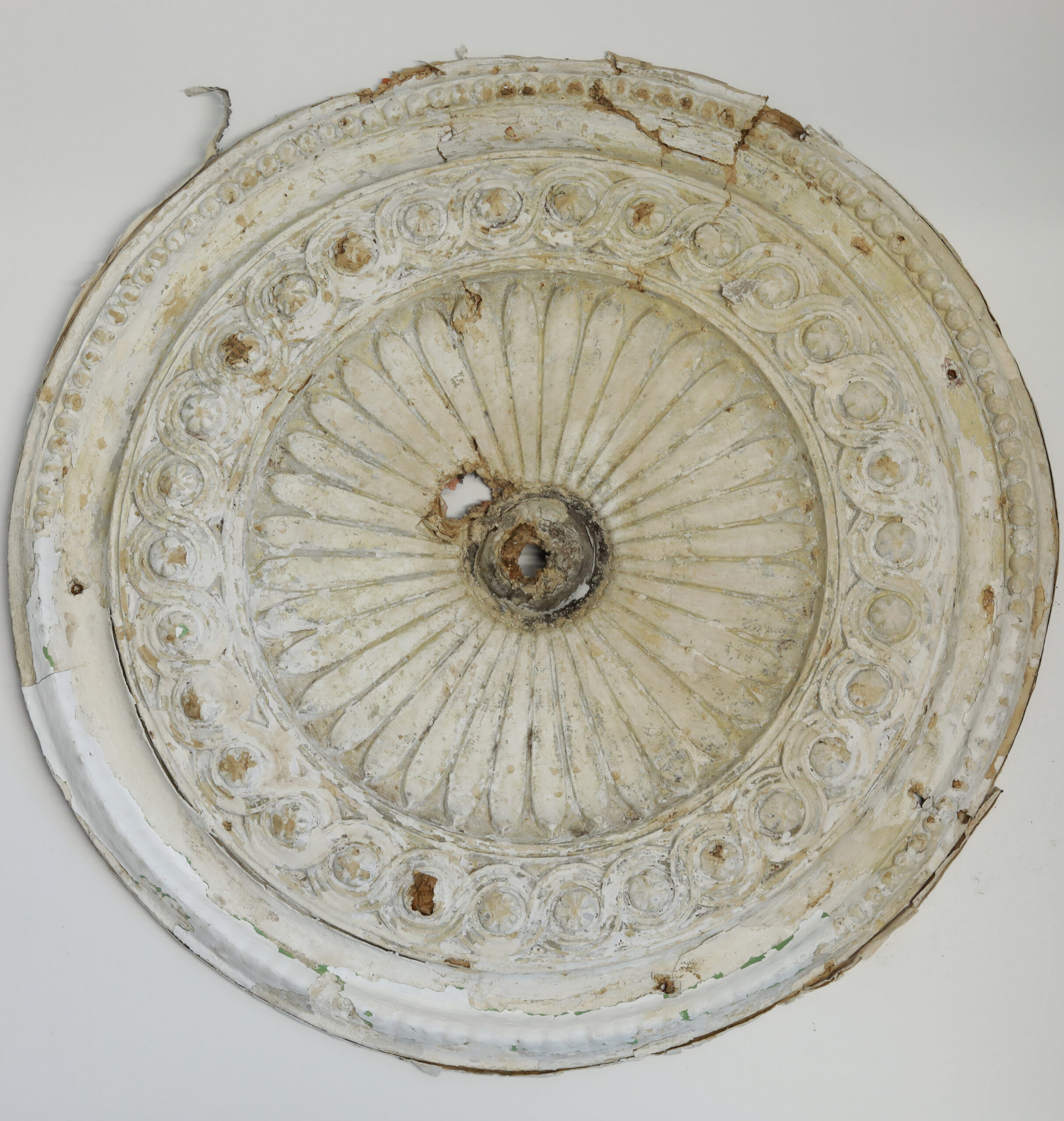


Lõputöö restaureerimisobjektiks on Vaeküla mõisast pärit papjeemašee tehnikas laerosett. Eesmärk oli taastada roseti algne kuju ja täita kaod pabermassiga.
Annan töös ülevaate papjeemašee kasutusest ajaloolises interjööris ning uurin, kuidas ja miks seda materjali kasutati. Teoreetiline pool käsitleb papjeemašee ajalugu, selle kasutust Eestis, tootmist ja tehnikaid. Töös keskendun roseti restaureerimise protsessile ja kirjeldan, millise lähenemisega on varem sarnaseid objekte restaureeritud. Samuti uurin, millist rolli täitis papjeemašee alternatiivina stukile, puidule ja kipsile.
The restoration object of the final project is a papier-mache ceiling rose from Vaeküla Manor. The aim was to restore the original shape of the rose and fill the losses with paper pulp.
In the work, I provide an overview of the use of papier-mache in historical interiors and examine how and why this material was used. The theoretical part discusses the history of papier-mache, its use in Estonia, its production, and techniques. The work focuses on the restoration process of the rose and describes the approaches previously used to restore similar objects. I also examine the role that papier-mache played as an alternative to stucco, wood, and plaster.
